Why 80% of African startup funding comes from foreign investors and what it means for local founders
A new study of 4,444 founders across 51 countries reveals the hidden frictions shaping who builds, who funds, and who gets left out of Africa's startup boom. ... In Lagos, Nairobi, Cape Town and Cairo
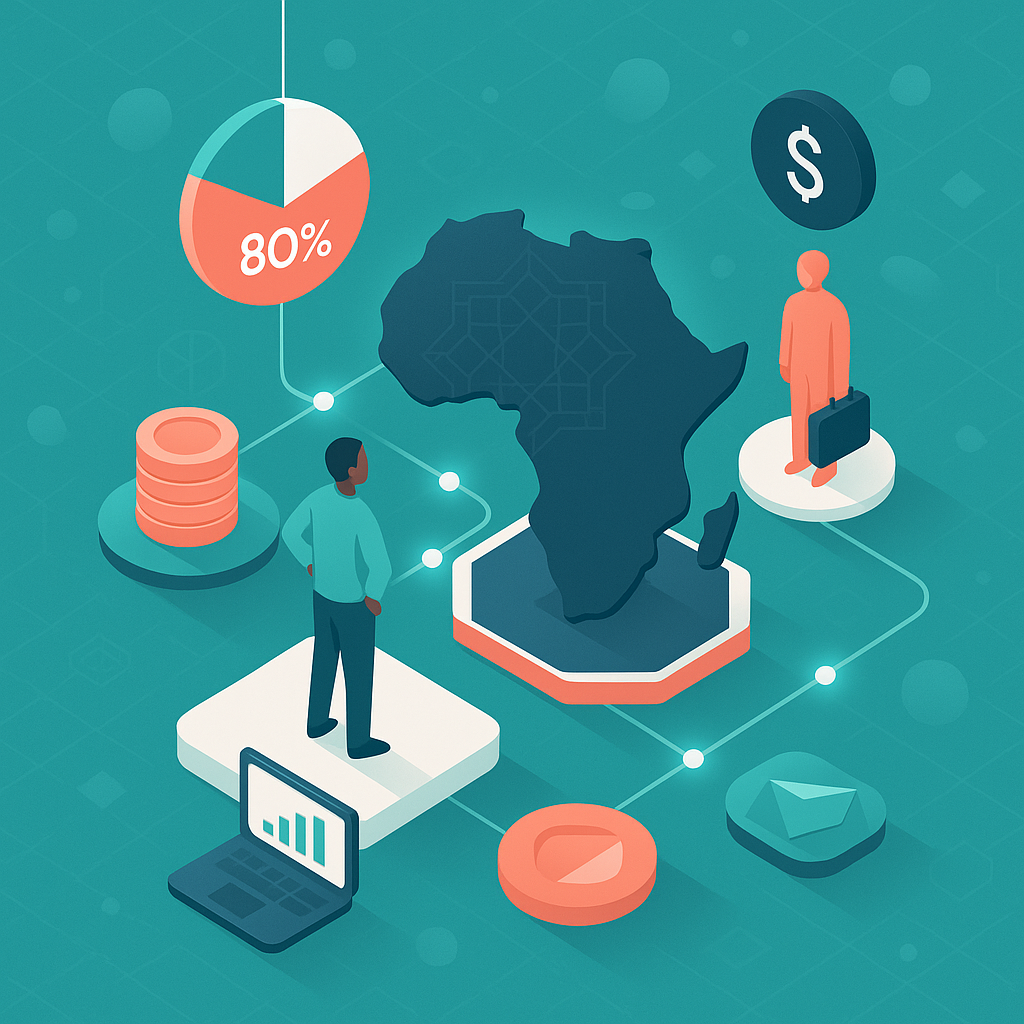
New study finds 80% of African VC deals include foreign investors; local founders steer toward equity but face access barriers
A study of 4,444 founders across 51 countries by a team of economists at the University of Chicago, Columbia, Stanford and the World Bank's IFC finds that roughly eighty percent of venture-capital deals in Africa involve at least one foreign investor. The report, published in May 2026, highlights stark concentrations and frictions: in 2022 the continent attracted barely one percent of global VC deal value despite representing nearly three percent of world GDP; the median African startup raises about $900,000 in its first round; and the so‑called "Big Four"—Nigeria, Kenya, South Africa and Egypt—accounted for 72% of VC deal value in 2024 while representing 42% of African GDP.
"Africa's founders display an overwhelming preference for equity over debt — so strong that switching a hypothetical offer from a debt instrument to an equity one is valued by founders as much as cutting the interest rate by eleven percentage points," the study's authors write.
That demand for equity sits against a financing landscape shaped and largely serviced from abroad. Most foreign capital flows from North America and Europe, with China and development finance institutions playing smaller roles. More than half of African VC deals are denominated in foreign currencies, and among deals involving foreign investors the share approaches two‑thirds. Successful startups often reincorporate in Delaware, Mauritius or the Cayman Islands, effectively moving key contracting offshore.
- Founder mobility: 46.8% of VC‑backed founders studied abroad; 58.4% worked abroad; combined, roughly two‑thirds of funded founders have foreign education or work experience.
- Geographic concentration: Lagos, Nairobi, Cape Town and Cairo captured nearly half of VC money on around a tenth of the continent's GDP.
- Network effects: a founder whose investor's country matches their country of education is 7.7 percentage points more likely to receive funding from that country, against a baseline probability of 2.2%—roughly a fourfold increase. Each such match brings, on average, an additional $1.1 million in funding.
The study also runs counterfactuals to quantify the impact of local capital constraints: reducing local‑capital frictions to European levels would raise the share of locally financed deals from 26% to 42% and expand startup creation by roughly 13%. Lifting the constraint on local entrepreneurs reaching the financing margin—chiefly through human capital and access—could increase startup activity by 29%.
For founders and policymakers the implications are concrete. The paper argues that pouring more dollars from London or San Francisco into the existing pipeline risks entrenching the current pattern: equity is what entrepreneurs want, but local equity remains scarce. The authors call for deeper African limited partners, stronger domestic pension and insurance pools, and broader efforts to bring non‑diaspora founders into the funnel, rather than relying on foreign LPs and offshore contracting alone.
As the study concludes, "The plumbing, however, runs mostly through other people's countries — and quietly determines who gets to build." Examples of ongoing cross‑border activity include commercial moves such as Nigeria’s LemFi, which is reportedly eyeing a €30 million Series B extension as diaspora fintech expansion gathers pace.
Stay in the loop
Join our weekly newsletter and get the latest MENA startup news, funding rounds, and insights delivered straight to your inbox.