Saudi Arabia Smart Agriculture Market: Precision Farming, IoT Adoption & Growth Outlook
How increasing focus on food security, adoption of precision farming technologies, and government support for sustainable agriculture are driving innovation, resource optimization, and productivity gr
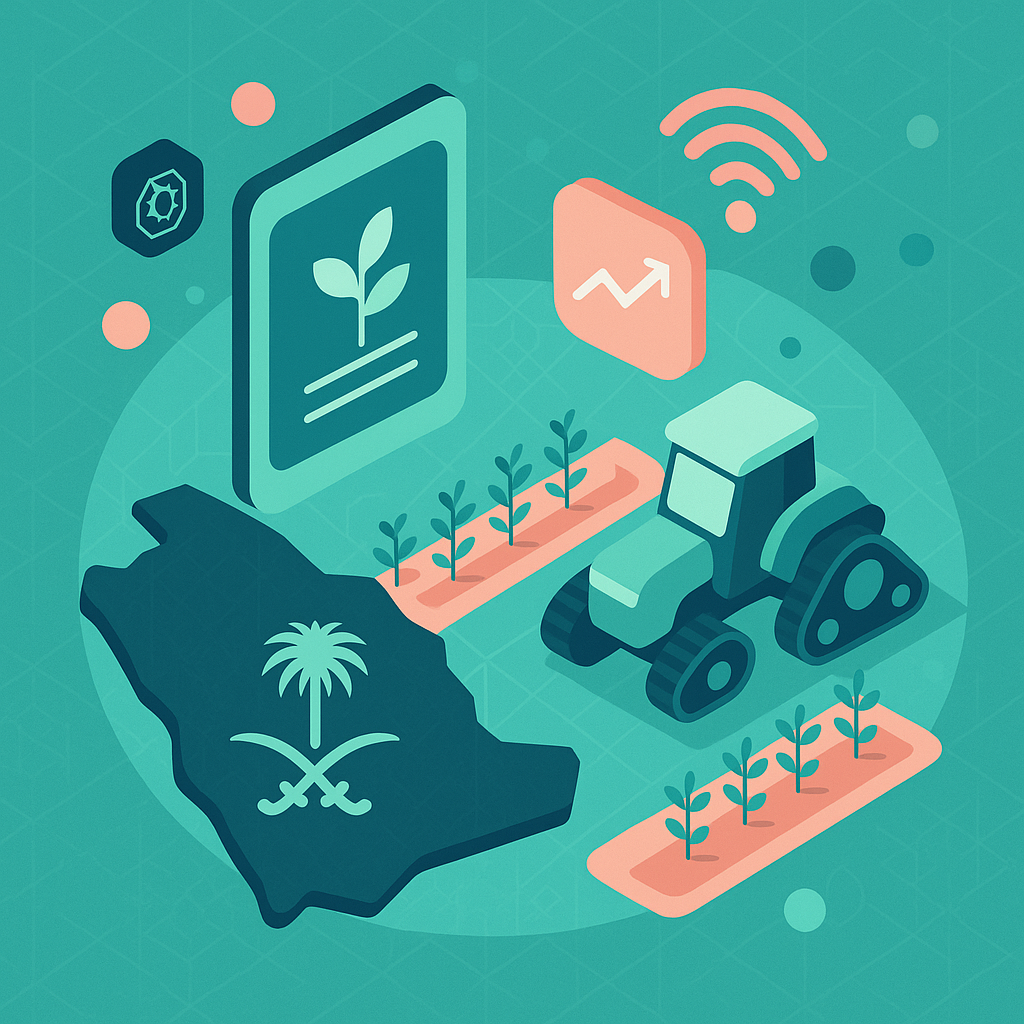
The Saudi Arabia smart agriculture market reached an estimated USD 178.6 million in 2025 and, according to IMARC Group projections cited in a report covered by Shubham Sharma, is expected to reach USD 305.8 million by 2034 at a compound annual growth rate of 6.16% between 2026 and 2034. Policymaking under Vision 2030, large-scale public and private investment, and acute water constraints are driving rapid adoption of precision farming, IoT-enabled irrigation, vertical farming and drone-enabled monitoring across the Kingdom.
"When government money moves this decisively, market adoption follows," the report said, underlining the role of sustained public funding and targeted programs in accelerating technology uptake on Saudi farms.
- Government financing and targets: The report notes the Kingdom has committed over SAR 20 billion annually to modernize agriculture and that the Agricultural Development Fund distributed roughly USD 220 million for high‑tech greenhouses between 2021 and 2025. A SAR 4 billion greenhouse expansion program running from 2023 to 2025 aims to boost output by 430,000 tonnes annually.
- Private investment and partnerships: Saudi Arabia attracted more than USD 9.8 billion in private-sector investment into food and agriculture projects in 2024. Cross-border collaborations include a Saudi–South Korea smart agriculture complex whose foundation stone was placed on April 21, 2025, and private partnerships such as Tamimi Markets with Mitsui and Zero SRL to launch smart farming in Al Kharj.
- Technology adoption and scale projects: Precision farming accounts for about 35% of the smart agriculture market. GPS-guided tractors and autonomous sprayers are reported to cut operational costs by 25–30%, while agricultural drones have become routine in regions such as Al-Qassim and Tabuk. In February 2025 a 20,000‑square‑metre indoor vertical farming facility in Riyadh, developed by Vertical Farms Company (VFCo), Mowreq Specialized Agriculture and YesHealth Group, began operating with fully automated AI monitoring.
- Water efficiency and controlled-environment agriculture: Agriculture uses roughly 80% of Saudi freshwater resources. IoT-enabled precision irrigation systems are cited as cutting water usage by up to 60%, and some hydroponics and vertical-farming setups can reduce consumption by as much as 90% compared with traditional methods. NEOM’s Topian opened a four‑hectare advanced greenhouse in Oxagon in December 2024; PIF-backed Green Dunes reportedly uses 95% less water than conventional farming.
- Market signals and early wins: The Kingdom imports about 80–85% of its food but has tightened domestic output in some areas — local dairy now meets 109% of domestic demand and eggs 116%. Saudi agricultural GDP reached approximately SAR 114 billion in 2024.
- Startup funding: Agritech startup Arable closed a USD 2.55 million seed round in January 2025, with 90% of capital coming from international investors, signalling continued overseas interest in Saudi agritech opportunities.
Outlook
IMARC Group’s forecast to 2034 frames a market in transition: government support under Vision 2030, equipment subsidies such as an August 2025 Agricultural Development Fund SAR 2.5 billion program, and heavy private investment are assembling the supply and demand sides for modern agriculture. Expect continued scaling of controlled-environment projects and wider deployment of IoT irrigation and AI monitoring as cost savings and water efficiency metrics become central to farm economics. Cross‑border technology transfer and targeted financing for small and medium farms will be key to translating pilot projects and flagship facilities into broader national food‑security gains over the next decade.
Stay in the loop
Join our weekly newsletter and get the latest MENA startup news, funding rounds, and insights delivered straight to your inbox.