Joint operation with US opens Saudi Arabia to barrage from Iran and proxies
Saudi Arabia carried out coordinated strikes with the United States against Iran-aligned militias in Iraq after a wave of drone attacks, marking a shift toward more assertive military measures and deeper U.S. cooperation. The actions follow escalations in Yemen and concerns about broader regional conflagration.
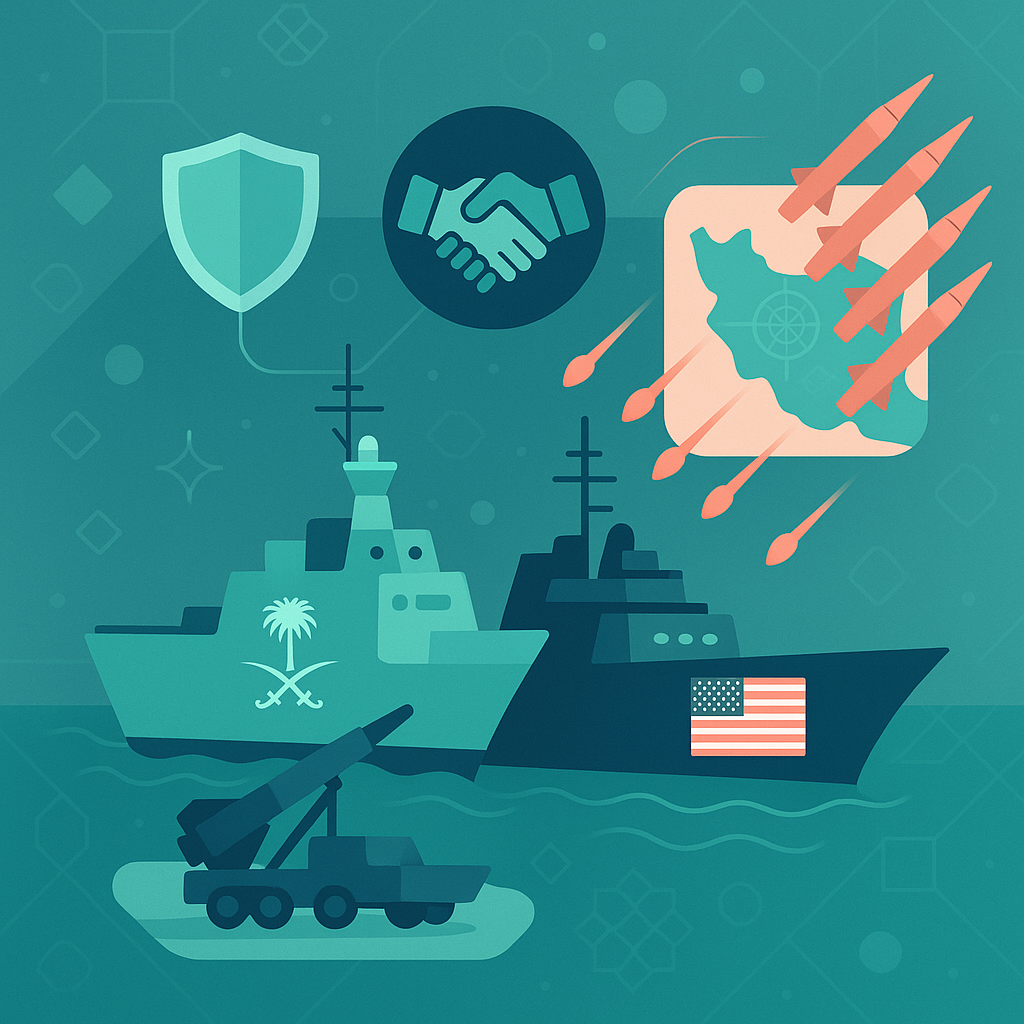
Saudi moves to joint strikes with US mark shift to direct confrontation with Iran-aligned militias
Saudi Arabia carried out coordinated strikes with the United States against Iran-aligned militias in Iraq after a sudden escalation in cross-border attacks, marking a departure from Riyadh’s prior public posture of de‑escalation. The strikes followed a wave of more than 30 drone attacks launched at the kingdom over three days and came after the Saudi Air Force bombed Sanaa Airport on July 13, triggering retaliatory Houthi missile activity and expanding the conflict beyond Yemen.
“Although individual Saudi pilots had often performed well flying as part of U.S.-led coalitions, decades of U.S. training missions had not produced a Saudi military capable of independently planning and executing an effective air campaign that minimized collateral damage,” a former Obama‑era Pentagon official observed, reflecting long-standing questions about the kingdom’s ability to conduct large-scale independent operations.
Context and recent developments
The decision to strike militia targets in Iraq represents the first publicly acknowledged Saudi attack beyond Yemen during the current war and signals Riyadh’s embrace of more assertive measures after months of restraint. Several events contributed to the policy shift:
- Repeated attacks on Saudi infrastructure: Iraqi militias launched over 30 drone attacks on the kingdom in a three‑day period, the first direct strikes from Iraq on Saudi territory documented in this conflict.
- Escalation in Yemen: On July 13, the Saudi Air Force bombed Sanaa Airport after a Houthi delegation attempted to land, an action that drew criticism for the use of precision munitions on airport tarmac and prompted Houthi retaliatory strikes, including a ballistic missile targeting Abha International Airport.
- Broader theater expansion: The Houthi response included a de facto blockade of Saudi Arabia and attacks on shipping in the Red Sea and on oil infrastructure, expanding threats to Saudi economic lifelines.
- Engagement with Iraqi militias: Reports indicate that Saudi strikes targeted the headquarters of the 40th PMF Brigade, also known as Kataib al‑Imam Ali, a unit with close ties to Lebanon’s Hezbollah and a contentious position within Iraq’s Popular Mobilization Forces.
Observers note a contrast between Saudi public statements emphasizing de‑escalation and private pressure on U.S. policy. Media accounts have suggested Crown Prince Mohammed bin Salman lobbied Washington for a harder line on Iran earlier in the war, even as he later urged against restarting the conflict. The recent strikes, carried out with U.S. cooperation, appear to close that gap between private lobbying and overt action.
Outlook — sustained pressure or broader conflagration?
The coordinated strikes create the risk of widening the war into multiple fronts. Analysts warn that the Iran‑led Axis of Resistance, though degraded, retains sufficient missile and drone inventories to strain Saudi air defenses. The kingdom’s prior intervention in Yemen (2015–2022) exposed limits in its ability to translate advanced platforms and Western training into effective independent campaigns, particularly in joint air‑ground operations.
Key questions now are whether Saudi forces, bolstered by U.S. cooperation, can sustain pressure on militia networks in Iraq without further entangling the kingdom in protracted combat, and whether the Axis of Resistance will escalate retaliatory attacks on Saudi infrastructure, maritime traffic, or energy targets. The evolving dynamic between Riyadh, Tehran and proxy forces will determine whether the conflict stabilizes at the current intensity or expands into a broader regional conflagration.
Stay in the loop
Join our weekly newsletter and get the latest MENA startup news, funding rounds, and insights delivered straight to your inbox.