Fungus Grown in Old Brewery Now Matches Beef Price; Sustainable Meat Reaches Chef Kitchens
Berlin-based Nosh.bio has reached price parity with beef by producing koji mycelium in a converted Dresden brewery, while Oatly launched ready-to-drink products in Egypt via quick-commerce platform Breadfast, which recently raised $50M pre-Series C.
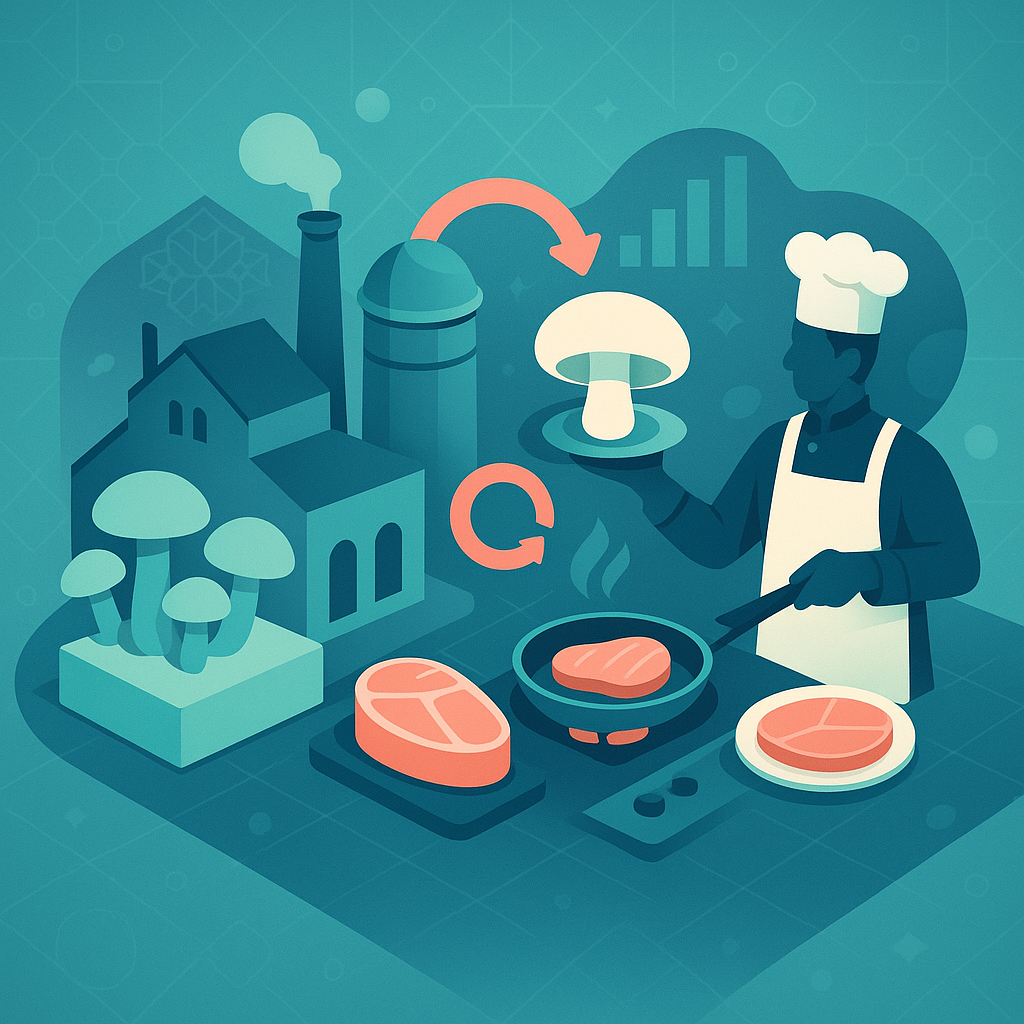
A trio of developments on the same August morning signalled a tangible shift in alternative protein and plant-based dairy markets: Berlin startup Nosh.bio says it has matched the price of conventional beef mince by growing Aspergillus oryzae (known as "kōji mold") at scale in a converted brewery in Dresden; Sweden's Oatly has launched in Egypt through quick-commerce platform Breadfast; and World Plant Milk Day drew 47,000 people into a seven-day dairy-free challenge ahead of the event's ninth edition on August 22. Together, the moves underscore that scientific hurdles for sustainable foods have largely been cleared and that the industry's remaining challenges are logistical — price, channel and habit.
"kōji mold" has been central to Nosh.bio's approach: rather than using the organism as an enzyme, the company grows the koji mycelium itself as a high‑protein, fiber‑rich food ingredient on low‑cost agricultural side‑streams, translating the fungus's natural fibrous, umami-rich structure into a meat-like texture without additives or texturizers.
Independent analysis cited by the company reports roughly 90% lower greenhouse gas emissions and 99% less land and 99% less water required to produce the koji protein ingredient compared with conventional beef protein. Nutritionally, the blended koji-beef mince delivers about 30% lower cholesterol and higher dietary fiber than pure beef mince, while cooking behaviour remains unchanged — it integrates directly into existing kitchen workflows.
- Nosh.bio converted a former brewery in Dresden to leverage existing fermentation infrastructure — tanks, temperature control and sterilization systems — a retrofit the company says is key to reaching cost parity.
- The startup has placed its blended koji-beef mince, burgers and meatballs on Saltz, a global digital marketplace for professional chefs and foodservice operators, making the product available to restaurant kitchens across Europe.
- Market context: a 2025 KPMG Germany and EHI Retail Institute survey found 16.7% of German consumers identify as flexitarians, a target segment for drop-in alternatives that require no behavioural change.
On the beverage side, Oatly's entry into Egypt follows a deliberate channel strategy. Rather than pursuing shelf space in Cairo supermarkets, the company launched ready-to-drink flavours — piña colada, strawberry and Brazilian lemonade — via Breadfast's quick-commerce menu. Breadfast, founded in Cairo in 2017, serves groceries, baked goods, ready meals and pharmacy products across Cairo, Giza, Alexandria and Mansoura and claims delivery to 300,000 active users within 60 minutes. The platform raised $50 million in a pre-Series C round in early 2026 backed by Mubadala and other institutional investors.
Oatly's decision to press ahead in the region also comes amid broader cost pressures: the company's European and International segment posted $143.1 million in Q2 revenue, up 21% year‑on‑year, and the company disclosed in its Q2 2026 earnings call that the ongoing regional conflict has created margin headwinds. Still, the rollout via Breadfast reflects Oatly's sequencing strategy of winning consumers through foodservice and on‑the‑go formats before wider retail distribution.
World Plant Milk Day's ninth edition reframed plant milks as a deep-rooted global tradition rather than a recent Western import: historical research highlighted almond milk in a 13th‑century Iraqi cookbook and soy milk in 14th‑century China, situating Egypt's grain‑based beverages within a 5,000‑year mapping of plant-based milk practices. The World Plant Milk Day Heritage Campaign emphasises that modern plant milks are a technological update of longstanding culinary practices.
Outlook: with proof points on lifecycle impact, a pathway to price parity through brewery retrofits, distribution openings for dairy alternatives in critical urban markets and rising consumer interest demonstrated by 47,000 early sign-ups for a global dairy-free challenge, the immediate barriers for mainstream adoption appear operational rather than scientific. The next phase for companies like Nosh.bio and Oatly will be scaling logistics — from retrofit production capacity to rapid-commerce partnerships — and converting early professional‑kitchen and on‑the‑go trials into repeat retail demand.
Related Startups
Nosh.bio
Grows Aspergillus oryzae (kōji) mycelium at scale as a high-protein, fiber-rich ingredient and sells blended koji-beef mince, burgers and meatballs to professional kitchens.
Oatly
Swedish plant-based dairy company that launched ready-to-drink flavours in Egypt via quick-commerce partner Breadfast.
Breadfast
Cairo-based e-grocery and delivery platform that evolved from a bread delivery service into a broader digital commerce app offering groceries, ready-to-eat meals, medicinal products and digital payment solutions.
Saltz
Global digital marketplace for professional chefs and foodservice operators; distribution channel for Nosh.bio's blended koji-beef products.
Related Founders
Stay in the loop
Join our weekly newsletter and get the latest MENA startup news, funding rounds, and insights delivered straight to your inbox.