Why Dubai built Burj Khalifa and what it houses
The article explains that Dubai built the Burj Khalifa as a landmark to attract tourists and investors and to serve as an economic hub, describing its design, facilities, revenue and mixed-use program. It highlights construction, engineering feats, record-setting elements and the tower's role in driving real estate and tourism investment.
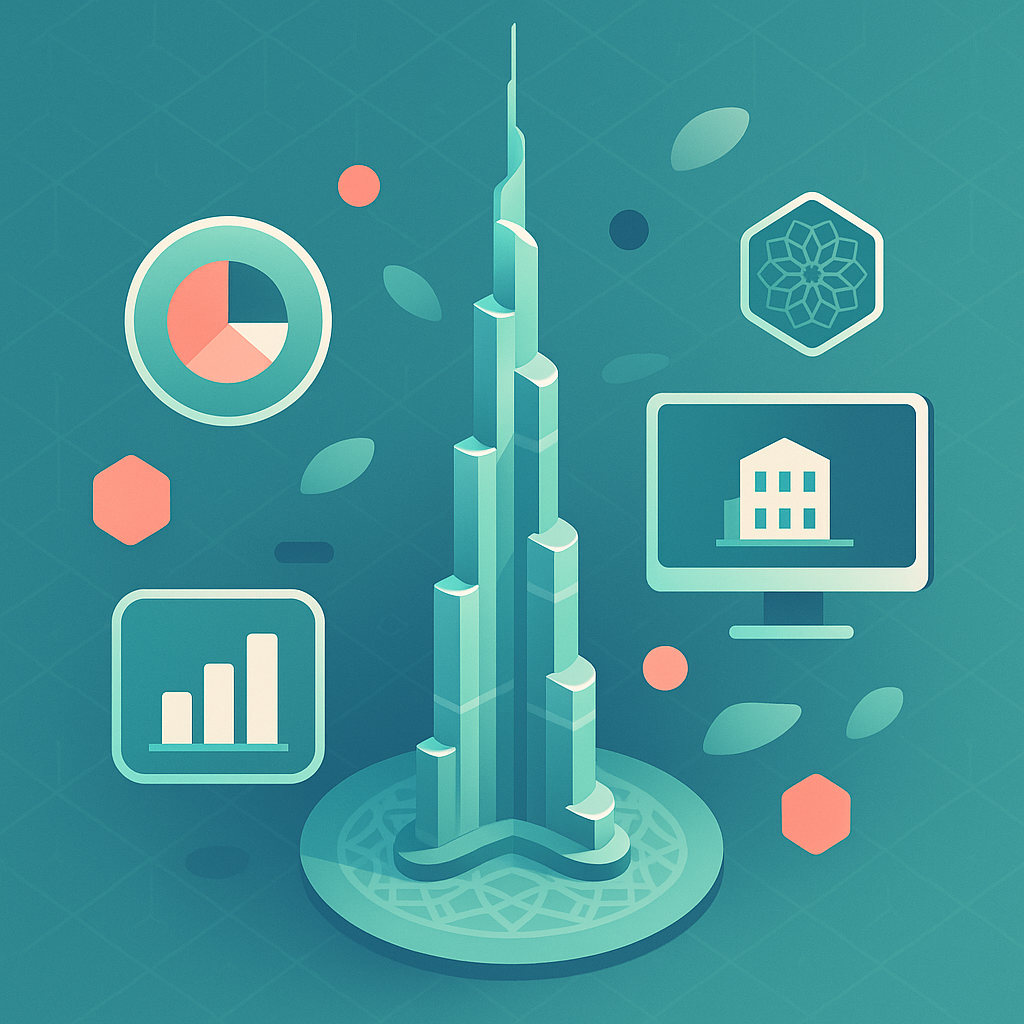
Burj Khalifa, the 828-metre tower that redefined Dubai's skyline, was conceived primarily as a landmark for Downtown Dubai to "attract tourists and investors while serving as a hub for economic activity." Construction began in 2004 and the tower was completed in October 2009, officially opening in January 2010 at a reported cost of $1.4 billion. Since inauguration, the building has generated significant revenue: entry ticket sales alone bring in about $621 million annually, and residential units have earned $2.18 billion since 2010, with over 76% of those units priced above $1 million.
"The primary goal of constructing Burj Khalifa was to create a landmark for Downtown Dubai that would attract tourists and investors while serving as a hub for economic activity," the project statement reads, underscoring the building's dual mission as both an architectural statement and an economic engine.
Design, construction and engineering feats
The tower was designed by Skidmore, Owings & Merrill (SOM) with Adrian Smith as chief architect and Bill Baker as structural engineer. The design team undertook rigorous studies on wind resistance, material strength, and temperature variations along the building's height, pushing contemporary engineering boundaries. The structure's telescopic spire contains 4,000 tonnes of structural steel and houses communication equipment; xenon lights flash 40 times per minute to prevent collisions.
- Exterior: 26,000 glass panels, each weighing 362 kg, installed by more than 300 Chinese cladding specialists — a world record for aluminium-and-glass façade installation at 512 metres.
- Vertical transport and safety: 57 elevators, eight escalators, and the world's tallest service elevator capable of carrying 5,000 kg; stairways reinforced with fireproof concrete.
- Utilities: a water system supplying an average of 946,000 litres daily.
- Observation decks: public decks on levels 124, 125 and 148 offer panoramic views of Dubai.
What it houses
Burj Khalifa was planned as a "vertical city," combining residences, hospitality, corporate space and leisure under one roof. The Armani Hotel occupies floors 1 to 8, while over 900 private Armani residences designed by Giorgio Armani span levels 9 to 108. Corporate suites, spas, gyms and swimming pools extend through higher floors, with facilities reaching as high as level 154. Dining is anchored by Atmosphere on level 122, touted as the world's highest restaurant from ground level.
The tower also claims records for the most floors, the highest elevators, the tallest habitable floor and the highest residential apartments in any building worldwide — elements that help maintain its status as both a tourist magnet and a premium real estate asset.
Outlook
Named in honour of former UAE president Khalifa bin Zayed Al Nahyan in recognition of his financing support, Burj Khalifa continues to be a major economic driver for Dubai. Its combination of ticket revenue, high-value residential sales and branded hospitality reinforce the original vision of drawing global investment into real estate, business and tourism. As the tower remains a focal point for visitors and investors, its sustained earnings — including the reported $621 million yearly from ticket sales and $2.18 billion in residential revenues since 2010 — illustrate the enduring commercial payoff of Dubai's landmark strategy.
Stay in the loop
Join our weekly newsletter and get the latest MENA startup news, funding rounds, and insights delivered straight to your inbox.