VC Money Floods Into U.S. Nuclear Startups as AI Power Demand Explodes
Venture capital funding for nuclear fission and fusion startups has surged in 2026, topping $4.5 billion across 81 companies as investors — including notable tech figures — seek zero-emission, round-the-clock power to meet exploding AI-driven data-center demand. The boom has prompted debate over prioritizing startup innovation versus investment in proven large-scale reactors.
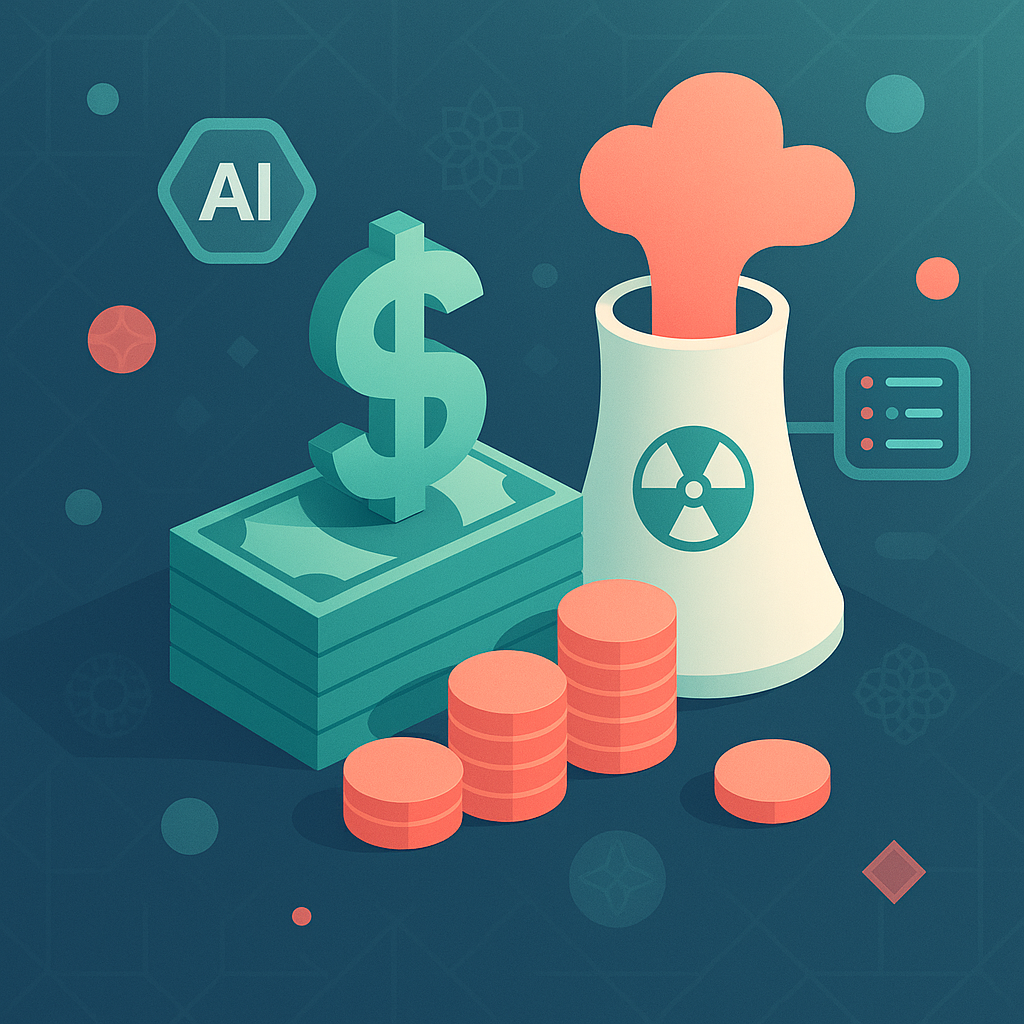
Global venture capital funding for nuclear fission and fusion startups has already topped $4.5 billion across 81 companies in 2026, putting the sector on pace to surpass last year’s record $6.2 billion invested in 93 companies. Investors from Big Tech and Silicon Valley are driving a surge in interest as data-center energy demand from artificial intelligence workloads pushes companies to seek round-the-clock, zero-emissions power sources.
“The administration is chasing unproven technology when it could encourage Wall Street investment in large-scale reactors,” an op-ed warned, reflecting a chorus of critics who say the rush toward startups may be bypassing established safety practices and diverting attention from proven reactor projects.
The current funding wave is concentrated in the United States, where public and private sectors are highly active. Prominent technology figures, including Sam Altman and Bill Gates, have been named among those pouring money into fusion ventures to help meet ballooning electricity demand driven by AI. Reporting shows that the $4.5 billion total in 2026 to date covers 81 companies engaged in both fusion and advanced fission technologies.
What investors are backing
- 2026 funding: $4.5 billion across 81 companies (year-to-date).
- 2025 benchmark: $6.2 billion invested across 93 companies.
- Key investors: Big Tech figures such as Sam Altman and Bill Gates have direct exposure to fusion investments.
Venture capitalists are signaling that nuclear — long a policy and engineering challenge — is increasingly viewed as part of an “all-of-the-above” strategy to meet future power needs. Data-center hyperscalers, which operate massive server farms supporting AI services, are said to be stretching conventional grid planning and are prompting companies to consider on-site or contracted nuclear generation as a stable base load option.
Yet the acceleration has prompted debate among policy makers and energy experts. Critics warn the startup boom risks sidestepping voluntary safety guardrails and could draw capital and talent away from large-scale, commercially proven reactors that some argue would more quickly add meaningful nuclear capacity. The op-ed line that the administration is prioritizing “unproven technology” underscores worries that regulatory and investment frameworks may be misaligned with near-term deployment needs.
Industry backers counter that private funding and entrepreneurial innovation can accelerate breakthroughs in reactor design, modular construction, and fusion science more rapidly than incumbent models. Proponents argue that a diversified pipeline — from advanced fission small modular reactors to multiple fusion concepts — increases the likelihood of delivering reliable zero-carbon electricity at scale over the next decade and beyond.
Outlook
If current trends hold, 2026 will eclipse 2025’s record funding total, signalling sustained investor belief in nuclear startups as a strategic response to soaring AI-related electricity demand. The near-term trajectory, however, will hinge on whether regulators and industry can reconcile rapid innovation with robust safety and licensing practices, and whether capital flows can be balanced between experimental ventures and deployment of proven large-scale reactors that can expand nuclear capacity more immediately.
Stay in the loop
Join our weekly newsletter and get the latest MENA startup news, funding rounds, and insights delivered straight to your inbox.