UAE and India deepen tech ties with Responsible AI agreement
Abu Dhabi's G42 and Credo AI partner to accelerate the adoption of more transparent AI systems across emerging markets
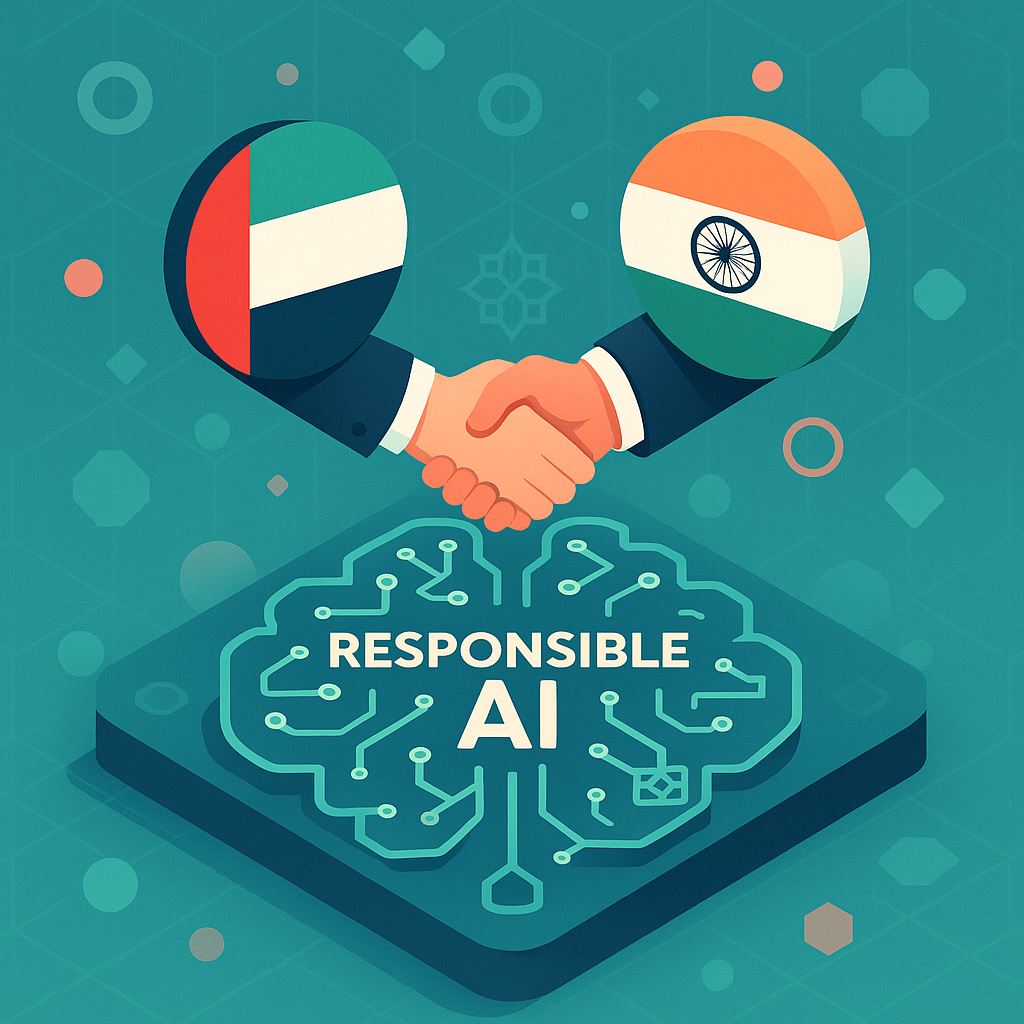
Abu Dhabi artificial intelligence group G42 has signed a preliminary partnership with US governance platform Credo AI to "operationalise Responsible AI across the Global South", officials said after the agreement was unveiled at the India AI Impact Summit in New Delhi on Friday. The deal will focus on risk-monitoring tools, policy design and education programmes for governments and enterprises, targeting emerging markets to embed transparency, fairness, security and accountability into AI systems as adoption accelerates.
"AI innovation and AI governance must advance together," said Andrew Jackson, group chief AI officer at G42. "When trust is engineered into the system from the start, innovation accelerates, deployment is smoother and adoption happens faster at scale."
Partnership scope and capabilities
G42 and Credo AI described the collaboration as a response to growing evidence that AI systems can perpetuate social and clinical biases when trained on unrepresentative data. The joint work will prioritise risk monitoring, policy design and education across the Middle East, Africa, Latin America and broader Asia — regions the partners frame as particularly vulnerable to harms from biased models.
- Operationalisation: developing tools and processes to embed trust, accountability and explainability into AI deployments.
- Risk monitoring: deploying systems to detect bias and safety issues at scale, including in language models and healthcare algorithms.
- Policy and education: designing governance frameworks and training programmes for public-sector bodies and enterprises.
Credo AI has positioned itself as a platform that codifies regulatory frameworks such as the EU AI Act and international standards into governance products used by large enterprises and public-sector organisations. G42 has previously launched several Responsible AI initiatives, including the Responsible AI Future Foundation with Microsoft, a Frontier AI Safety Framework, and participation in the Frontier AI Safety Commitments and the World Economic Forum’s AI Governance Alliance.
Why the Global South focus matters
The agreement follows warnings raised at the New Delhi summit and in recent research about AI bias in non-Western contexts. A 2025 DECASTE report, developed by IBM and Dartmouth College researchers, found that large language models could infer caste-linked social signals from Indian surnames and, in some cases, associate dominant caste names with higher-status professions while linking marginalised caste names with lower-status work. In healthcare, studies published between 2020 and 2024 in journals including JAMA Dermatology and The Lancet Digital Health documented that dermatology algorithms trained mainly on Western patients frequently missed or misidentified conditions in African and South Asian populations.
Carme Artigas, co-chair of the UN’s AI High Level Advisory Body, warned in late 2024 that the lack of inclusiveness in AI data and policy "exacerbat[es] biases and lack of inclusiveness" and described the exclusion of non-Western perspectives as a "new way of techno-colonialism".
Outlook
Navrina Singh, chief executive of Credo AI, said the tie-up will allow organisations "across the Middle East and Global South the capability to deploy AI fast, govern it at scale, and turn responsible adoption into genuine competitive advantage". The agreement also aligns with expanding UAE–India technology ties, including subsea data links such as the SING project involving Dubai’s du and growing regional hubs from Indian IT firms including Tata Consultancy Services, Infosys and Wipro.
By combining G42’s regional reach and Credo AI’s governance tooling, the partners aim to influence how AI is deployed and regulated in emerging markets, positioning responsible practices as a prerequisite for broader and faster adoption.
Stay in the loop
Join our weekly newsletter and get the latest MENA startup news, funding rounds, and insights delivered straight to your inbox.