Toyota Egypt Group enters electric vehicle market with launch of bZ4X and Lexus RZ
Both the Toyota bZ4X and Lexus RZ are built on the global e-TNGA platform and feature battery systems manufactured in Japan.
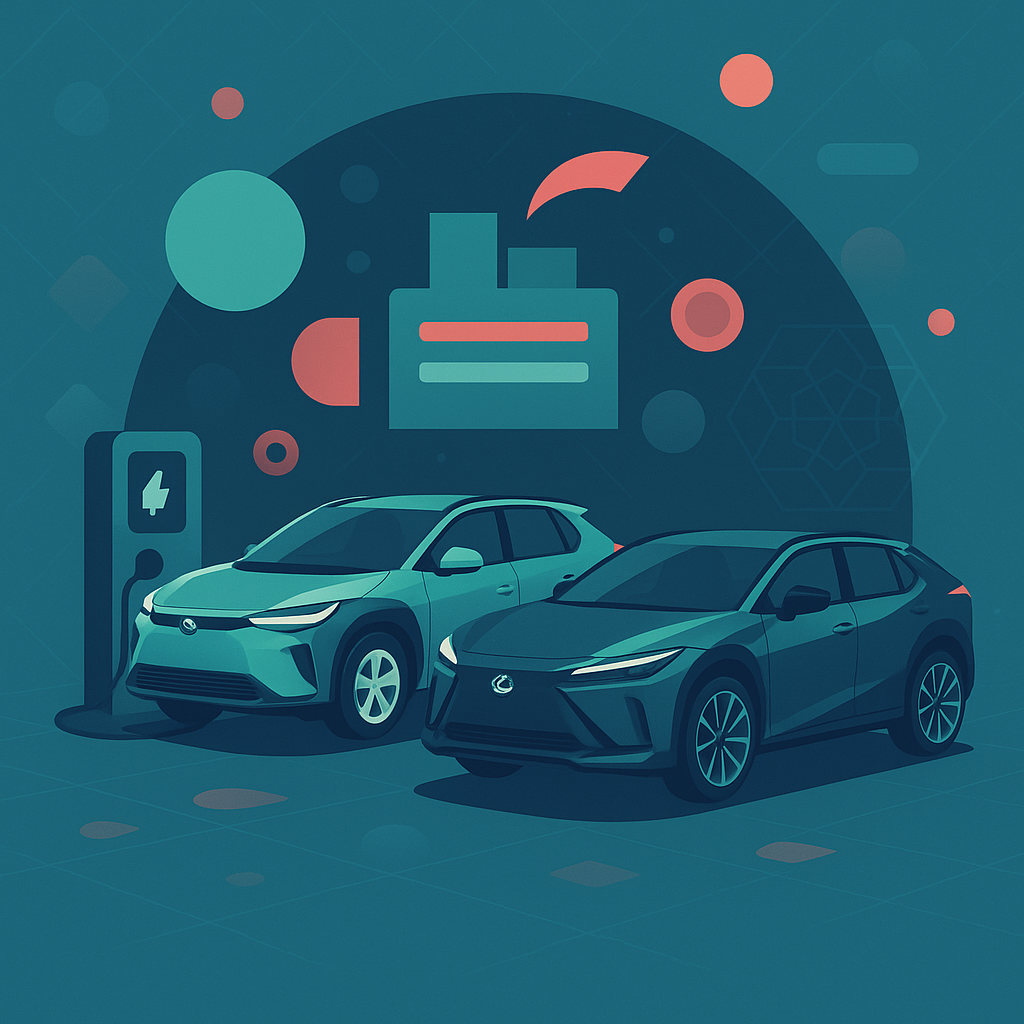
Toyota Egypt Group has formally entered Egypt’s electric vehicle market with the launch of two battery-electric models — the Toyota bZ4X and the Lexus RZ — unveiled at an event held at the Grand Egyptian Museum. Both cars are built on Toyota’s global e‑TNGA platform and use battery packs manufactured in Japan, marking the automaker’s first foray into the local EV segment after 45 years of domestic operations and aligning with the state’s emissions‑reduction targets.
“We feel great pride in announcing the official entry of our Group into the electric vehicle sector in Egypt, through two models that represent the pinnacle of development from Toyota and Lexus,” said Ahmed Monsef, CEO of Toyota Egypt Group. “What distinguishes this launch is its full reliance on authentic Japanese ‘Know‑How’, which is the cornerstone that makes our electric vehicles a unique model in precision, quality, and technological innovation.”
Models and specifications
Toyota presented detailed specs for both models, including battery sizes, performance figures and charging times:
- Toyota bZ4X — Offered in Sport FWD and Premier AWD grades, the bZ4X uses a 73 kWh battery developed in Japan through a Toyota‑Panasonic collaboration. The model supports DC fast charging in about 30 minutes and charges from 20% to 80% in roughly four and a half hours. WLTP range is quoted at up to 567 km. The Sport FWD is equipped with a motor producing 224 HP and 268.6 Nm, with 0–100 km/h in 7.4 seconds and 18‑inch wheels. The Premier AWD delivers 343 HP total (front motor 268.6 Nm, rear motor 169.8 Nm), 0–100 km/h in 5.1 seconds and rides on 20‑inch wheels. The bZ4X includes X‑MODE for unpaved roads with Multi‑Terrain Select and GRIP Control Mode.
- Lexus RZ — Available as the Executive e350 (FWD) and F Sport e550 (AWD), the RZ is powered by a 77 kWh Japanese battery. AC charging supports up to 22 kW (enabling home charging in about three hours), while DC fast charging is around 30 minutes. The Executive e350 produces 224 HP, 0–100 km/h in 7.5 seconds, and a WLTP range of 508 km. The F Sport e550 delivers 408 HP, 0–100 km/h in 4.4 seconds, and a WLTP range of 450 km. The F Sport features Steer‑by‑Wire with a Yoke‑style steering wheel, Interactive Manual Drive, DIRECT4 torque distribution, 20‑inch wheels and wider rear tyres. Interior highlights include leather and Alcantara, Dynamic Ambient Light, a 14‑inch main display and a 3D Digital Panoramic Monitor System.
Safety, warranty and service
Safety systems were emphasised: the bZ4X carries Toyota Safety Sense 3.0, while the Lexus RZ is fitted with Lexus Safety Sense 3+ including Lane Tracing Assist, Dynamic Radar Cruise Control, Adaptive High Beam System, Blind Spot Monitor, Safe Exit Assist, Rear Cross Traffic Alert and Pre‑Collision System. Toyota Egypt Group guarantees battery efficiency will remain at no less than 70% after 10 years.
- Warranty: 8 years or 160,000 km on battery, electric motors and main power unit; additional 5 years or 150,000 km on remaining vehicle components.
- Equipment and charging: vehicles include a tyre repair kit (air compressor and emergency sealant), Type 2 and Type 1 chargers, and a home charger unit is being offered for a limited time.
- Diplomatic note: Fumio Iwai, Ambassador of Japan to Egypt, said the launch “stands as a symbol embodying this intersection between the greatness of history and the vision of the future,” highlighting Japan‑Egypt cooperation on technology, industry and sustainability.
Outlook: Toyota Egypt Group’s debut of the bZ4X and Lexus RZ positions the company as a new contender in Egypt’s emerging EV market, combining Japanese battery supply and established platform engineering with local aftersales guarantees. The launches dovetail with official emissions goals and signal a strategic move by a legacy automaker — after 45 years in Egypt — to offer electrified mobility and to expand service and charging capabilities in the market.
Stay in the loop
Join our weekly newsletter and get the latest MENA startup news, funding rounds, and insights delivered straight to your inbox.