The architecture of Oman’s energy power: Resources, ports and global partnerships
Oman is leveraging its coastline, ports and international partners to develop hydrocarbons, renewables and a hydrogen export corridor centered on Duqm, while weighing domestic needs for gas, power and water. Key corporate actors include OQ, Oman LNG, TotalEnergies and Petroleum Development Oman, but the piece names no startups or founders.
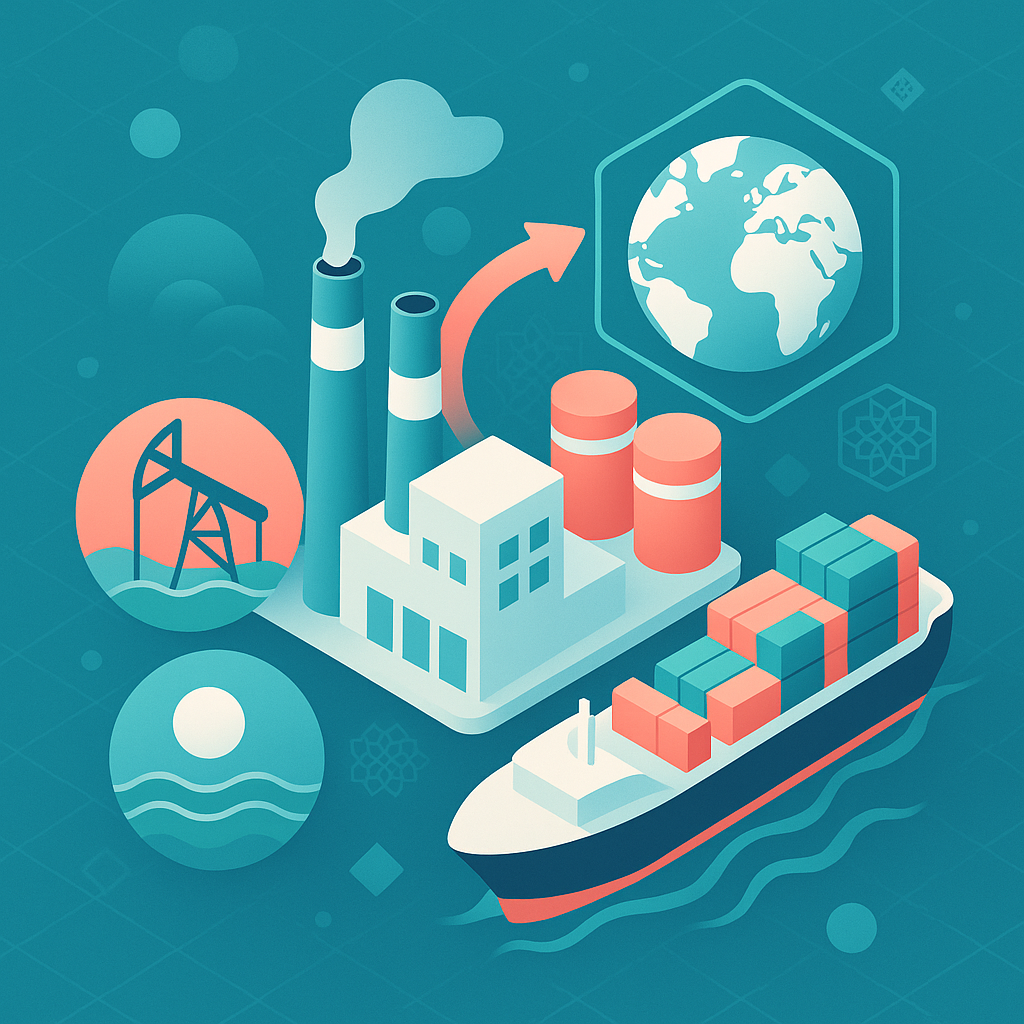
Oman is leveraging its coastline, ports and diverse international partners to position itself as a competitive energy exporter while weighing domestic needs for gas, electricity and water. The country holds an estimated 4.8 billion barrels of crude oil and condensate reserves at the end of 2024, and its Duqm refinery — a 230,000 barrels-per-day project jointly owned by OQ and Kuwait Petroleum International — sits at the centre of a strategy to move refining and product exports to a coastline outside the Strait of Hormuz.
"Every new gas export commitment also represents a decision about domestic consumption," the analysis warns, underlining the trade-offs Muscat faces between overseas contracts and local industry, power generation and oil operations.
Oman's physical and contractual energy architecture spans hydrocarbons, renewables and nascent hydrogen supply chains. Key facts and assets include:
- Duqm refinery (230,000 bpd) and Ras Markaz storage and pipeline links that provide flexibility in feedstock sourcing and product-loading.
- Crude reserves of approximately 4.8 billion barrels (end-2024, US International Trade Administration figure).
- Oman LNG's Qalhat complex, operating three liquefaction trains, which ties domestic production to long-term international contracts.
- Recent final investment decision for Marsa LNG in 2024, involving TotalEnergies and OQ, creating additional marine fuel export routes.
- Renewables capacity: Ibri II solar (500 MW), Dhofar I wind (50 MW), and Manah I & II combined (1,000 MW listed as operational projects by Nama).
- Petroleum Development Oman reporting an increase in gas injection at Harweel 2AB from three to four million cubic metres per day in its 2024 Sustainability Report.
- Hydrogen corridor agreement of 15 April 2025 to develop liquid hydrogen links from Duqm to Amsterdam and German industrial centres including Duisburg.
The hydrogen corridor agreement is particularly illustrative of the logistical and economic hurdles ahead. "Electricity, water, liquefaction and shipping must be provided at costs that make Omani hydrogen competitive," the piece notes, and it highlights desalination capacity and brine management as components of both the financial and environmental calculus. Muscat faces a central policy choice: how much of the hydrogen value chain to develop domestically — from production and liquefaction to downstream industrial use such as low‑carbon steel — versus exporting feedstock or intermediates to foreign partners.
Oman's renewable projects are designed to free gas now used in power generation and thermal oil recovery, with projects like Miraah demonstrating solar-generated steam replacing gas in enhanced oil recovery. But the report cautions that rising domestic demand could reabsorb some gas savings, and that refinery and petrochemical margins remain exposed to global volatility.
Diplomacy is an asset but not a guarantee. Oman’s balanced relations across the region create access to multiple investors, yet partners will benchmark Duqm and other sites against competing industrial centres on cost, regulation and infrastructure quality. The analysis warns that "during a regional crisis, shipping and insurance decisions may interrupt trade regardless of that shared interest," underlining the systemic risks inherent to export-dependent strategies.
Outlook: Oman’s energy leverage will hinge on linking gas, electricity and port infrastructure to domestic industry and skills development so export growth translates into sustained productive capacity and employment. Decisions on allocating gas between exports and local consumption, investments in desalination and brine management, and the pace of domestic value‑chain development for hydrogen will determine whether Duqm and related projects deliver long-term economic transformation or primarily serve as export nodes for foreign capital.
Stay in the loop
Join our weekly newsletter and get the latest MENA startup news, funding rounds, and insights delivered straight to your inbox.