The AI dividend: Could the Gulf turn AI wealth into guaranteed income?
Gulf policymakers are considering converting AI-generated wealth into an 'AI dividend' to broaden social protection as the region sees rising investor participation, large AI training programmes, and tech-linked industrial projects.
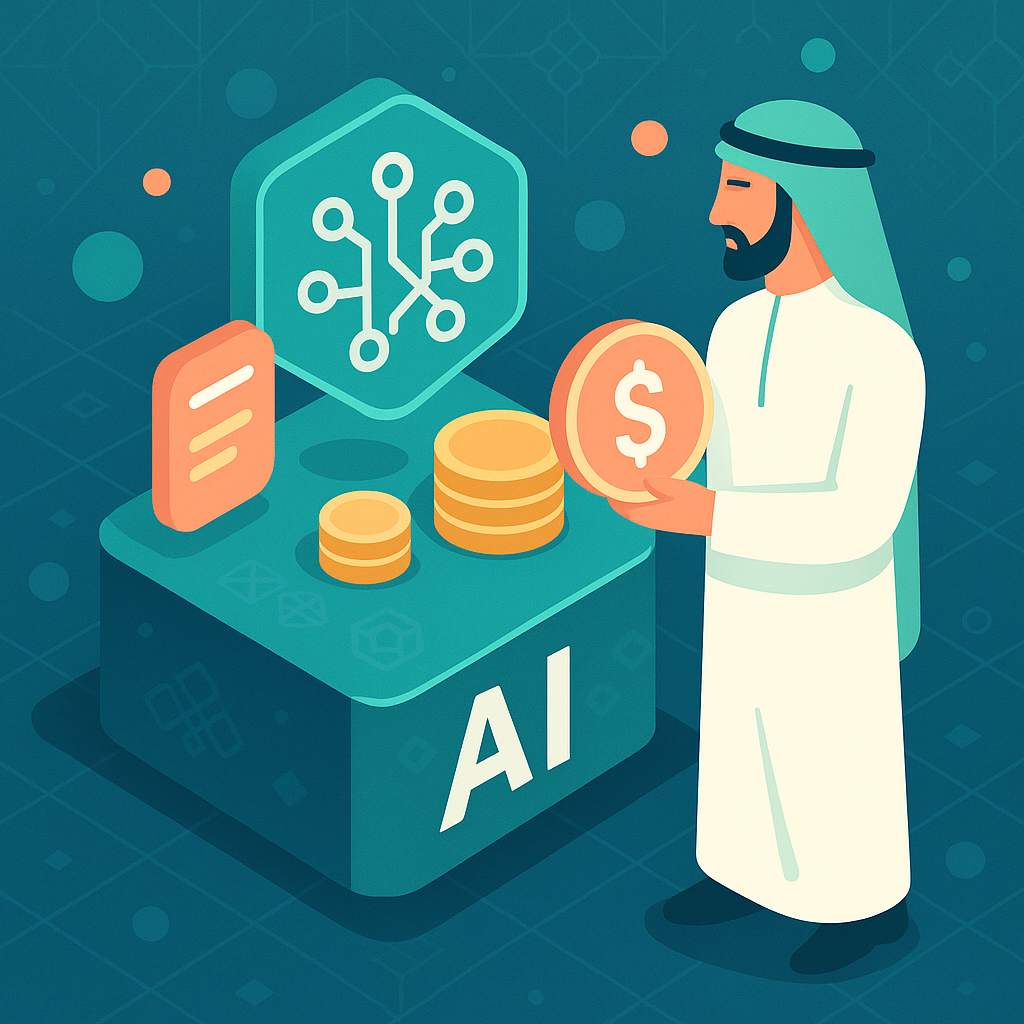
Gulf policymakers weigh converting AI-generated wealth into guaranteed income as region posts economic and tech milestones
Governments across the Gulf are increasingly discussing how to translate the rising economic gains from artificial intelligence into wider social protection measures, including proposals that have been framed as an “AI dividend.” The conversation comes as regional data points underline a shifting economic landscape: Dubai Financial Market added 42,864 new investors in the first half of 2026, with average daily traded value up 45.1% to $273 million and average daily trades rising 35.4% to around 18,800. At the same time, initiatives such as a Saudi AI training programme drew 51,000 participants from 170 countries, and projects like Energy Recovery’s Saudi plant are projected to add $36.5 million to GDP by 2033.
“The AI dividend: Could the Gulf turn AI wealth into guaranteed income?”
That question—posed repeatedly in policy and industry fora—captures a growing policy dilemma: how to ensure that concentrated gains from AI and related tech investments produce broad-based economic security rather than deeper inequality. Regional leaders and stakeholders are taking note of both economic indicators and social signalling. Qatar, for instance, recently ranked first regionally and among the world’s five leading economies for economic resilience in the 2026 IMD yearbook, a benchmark that amplifies arguments for proactive redistribution linked to long-term resilience.
Context and details
- Market and investment signals: The surge in new investors and trading activity on the Dubai Financial Market signals rising retail participation in capital markets that could benefit from AI-driven company growth.
- Skills and workforce development: Saudi Arabia’s AI training initiative, which attracted 51,000 participants from 170 countries, highlights an emphasis on building human capital to capture AI’s benefits locally and internationally.
- Industrial projects and GDP impact: Energy Recovery’s Saudi plant is expected to contribute $36.5 million to GDP by 2033, showing how AI-adjacent infrastructure and technology projects can feed national income streams.
- Cultural and civic signals: Public interest in entrepreneurship and innovation is visible—Najla Al-Midfa, widely featured in regional discussions on innovation, has become a recognizable voice in promoting entrepreneurial ecosystems and supporting policy dialogue.
Proposals for an AI dividend or guaranteed income vary in ambition and design. Advocates argue such a mechanism could provide a safety net against displacement and automation shocks while channeling sovereign or corporate AI gains into public goods. Critics point to the technical and political hurdles: measuring AI-specific rents, setting equitable distribution criteria, and ensuring long-term fiscal sustainability.
Outlook
Policymakers in the Gulf face a delicate balancing act. Converting AI wealth into guaranteed income would require transparent revenue streams—potentially tied to state-owned AI assets, taxation of AI-enabled superprofits, or dividends from state-linked projects—and robust administrative systems to deliver benefits. The region’s recent data—rising investor participation, large-scale training programmes, and measurable GDP contributions from technology projects—creates a plausible fiscal and political basis for pilots, but implementation will demand careful design, public buy-in, and international benchmarking.
As discussions advance, stakeholders from governments to entrepreneurs will be watching whether the Gulf can move from conversation to concrete pilots that test the feasibility of an AI dividend model adapted to the region’s economic structures and social expectations.
Related Startups
Related Founders
Stay in the loop
Join our weekly newsletter and get the latest MENA startup news, funding rounds, and insights delivered straight to your inbox.