A New Player Tackles One of Construction’s Costliest Problems
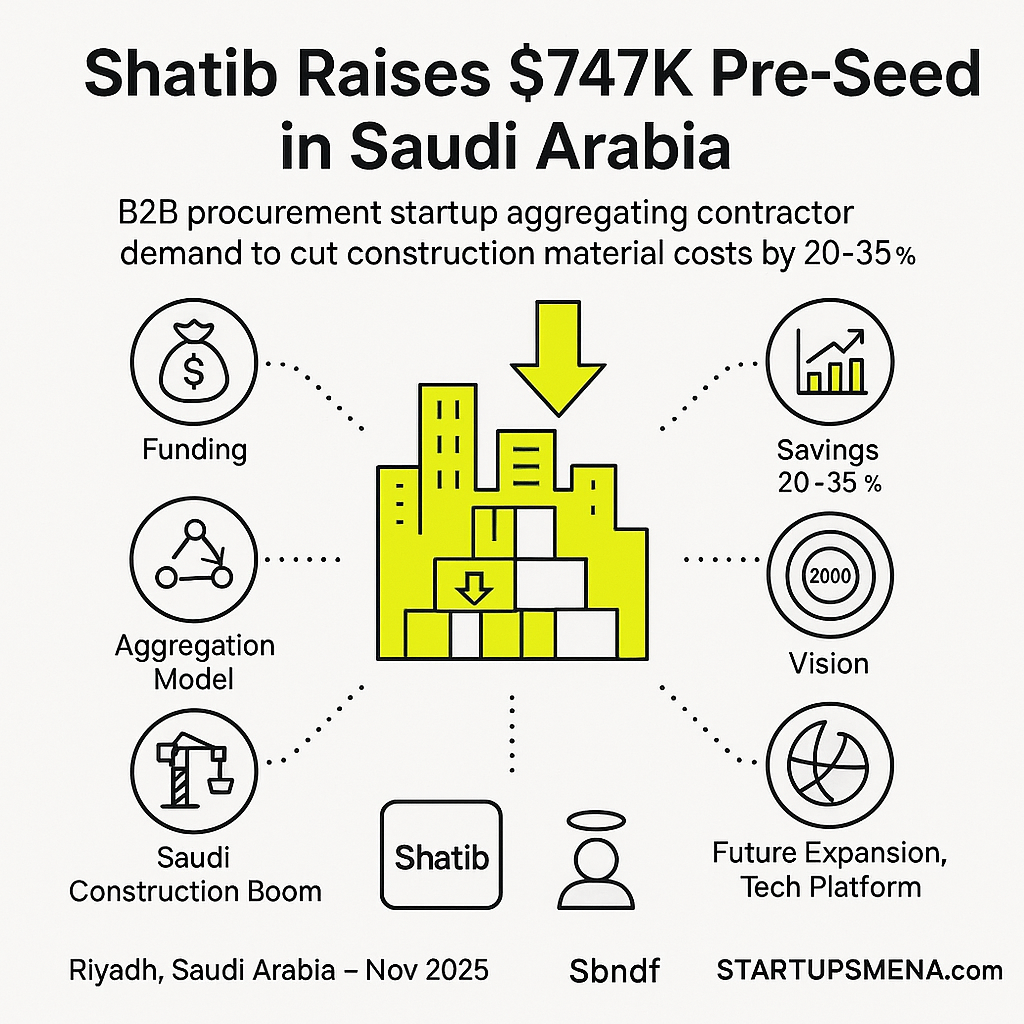
Riyadh-based B2B procurement startup Shatib has secured $747,000 (SAR 2.8 million) in a pre-seed round from a strategic angel investor, marking a significant step forward in the digital transformation of Saudi Arabia’s construction sector.
Founded in 2024 by Abdulaziz Mutib Al Masoud, Shatib aims to solve a stubborn and expensive challenge in the industry: fragmented purchasing and unpredictable material pricing. With construction demand skyrocketing across the Kingdom, the startup’s approach is both timely and necessary.
The Pain Point: Fragmented Demand, Rising Costs
Procurement inefficiency is one of the biggest drains on construction budgets, especially for small and mid-sized contractors who lack the volume power of major developers. Prices fluctuate frequently, suppliers vary widely in reliability, and negotiation leverage is limited.
Shatib’s answer is simple—and powerful:
- Aggregate demand across multiple projects
- Negotiate bulk pricing with manufacturers and distributors
- Pass cost savings directly to contractors
Early results show that clients save 20–35% on materials compared with standard market rates, making the model highly attractive across the value chain.
How Shatib’s Model Works
At its core, Shatib is a procurement orchestrator.
The platform:
- Collects purchase needs from various contractors
- Combines them into high-volume orders
- Negotiate directly with suppliers
- Ensures reliable delivery at predictable pricing
By functioning as a “shared purchasing engine,” Shatib offers the kind of bargaining power usually limited to Saudi Arabia’s largest developers.
This not only reduces cost but improves two additional friction points: speed and transparency.
Why This Matters Now: Saudi Arabia’s Construction Boom
Saudi Arabia is in the midst of one of the world’s largest construction cycles, driven by:
- Housing initiatives
- National infrastructure programs
- The Kingdom’s giga-projects
- Private-sector megadevelopments
With billions in pipeline projects, material procurement has emerged as both a strategic risk—and a strategic opportunity.
Shatib fits directly into Vision 2030’s push for:
- Digitalisation of traditional industries
- More efficient supply chains
- Greater private-sector innovation
- Localisation and competitiveness in construction
The startup isn’t just solving a procurement issue—it’s contributing to national-level economic efficiency.
What’s Next: Technology, Partnerships, and Scaling
With its new funding, Shatib plans to:
1. Strengthen Its Tech Platform
Develop tools for demand forecasting, pricing analytics, supplier scoring, and automated negotiation processes.
2. Expand Its Supplier Network
Onboard more manufacturers and distributors to widen the platform’s material categories and geographical reach.
3. Grow Its Customer Base
Target small and mid-sized contractors who are most affected by procurement inefficiencies, alongside larger developers needing cost stability.
4. Explore Regional Opportunities
While no formal plan has been announced, Shatib’s model is well-positioned for potential GCC expansion.
What Shatib Signals About the Region’s Startup Momentum
There are broader lessons in Shatib’s rise:
- Aggregation models still win—especially in B2B sectors with scattered demand.
- Procurement is becoming digitised, even in industries historically resistant to it.
- Strategic angel investors are increasingly fueling pre-seed innovation in Saudi Arabia.
- Founders with domain expertise—like Shatib’s procurement-focused leadership—retain an advantage in solving high-value operational problems.
Most importantly, Shatib showcases how high-impact innovation often comes from digitising what already works, not reinventing the wheel.
Editor’s Note — The Startups MENA Team
At Startups MENA, we focus on the narratives shaping how the Middle East builds its next-generation innovation economy. Shatib’s story is a reminder that the region’s most transformative startups aren’t only in fintech or AI—they’re also in the operational trenches of traditional industries like construction.
By bringing digital procurement and purchasing power to contractors of all sizes, Shatib reflects a broader shift underway in Saudi Arabia: where efficiency, transparency, and technology become the new competitive edge. As the Kingdom accelerates toward Vision 2030, innovations like these will define how infrastructure is delivered—and how the region builds smarter, faster, and more sustainably.
— The Startups MENA Editorial Team