Saudi Arabia launches $100 billion AI infrastructure fund to rival US and China
Saudi Arabia can build the data centres, but the harder challenge is building the human capital ecosystem — the researchers, engineers, and entrepreneurs who turn compute into capability. OpenAI close
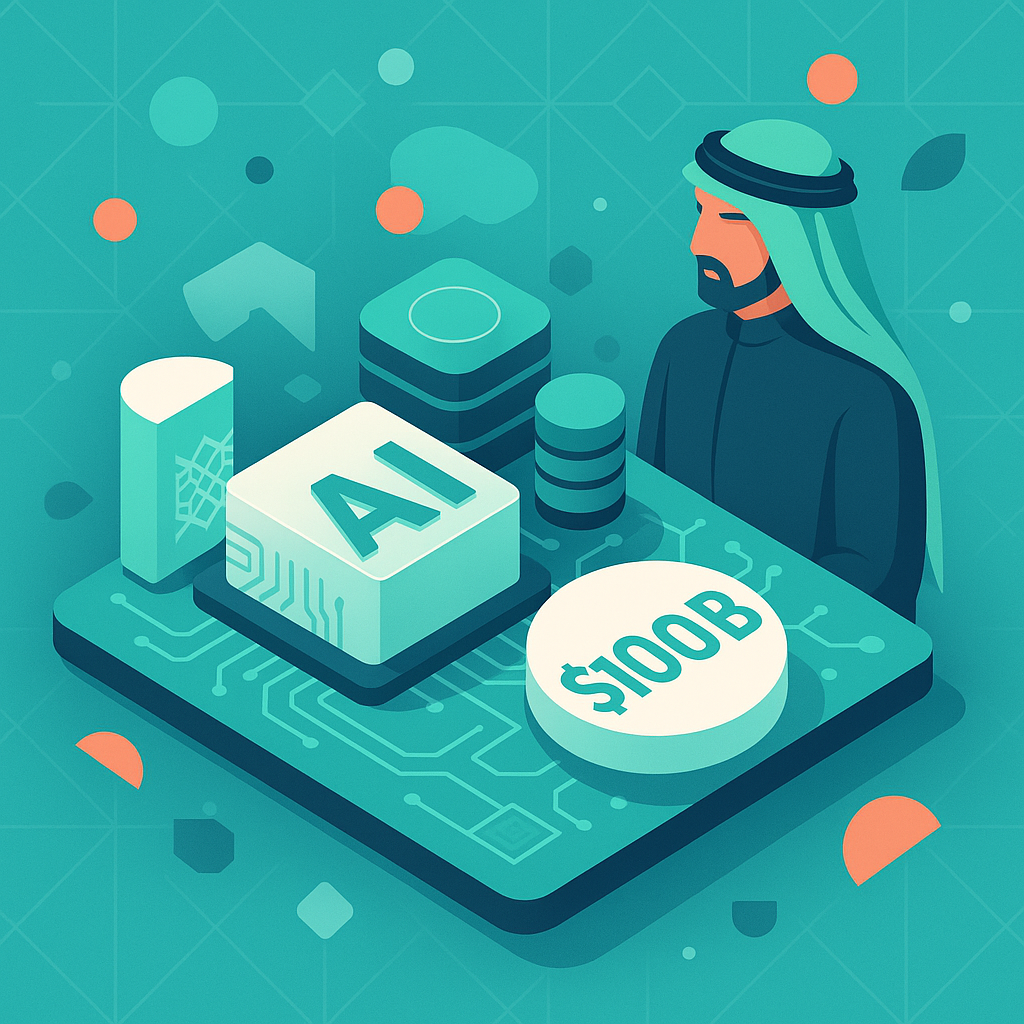
Saudi Arabia has launched a $100 billion investment fund dedicated entirely to AI infrastructure, the Kingdom announced during President Trump’s visit to Riyadh this week. The fund, named HUMAIN, will be jointly backed by the Public Investment Fund (PIF) and a consortium of US technology firms, and is designed to finance the construction of new data centre campuses, semiconductor supply agreements and the power generation capacity needed to run large-scale AI training operations.
"HUMAIN isn't a venture capital play hunting for the next chatbot startup," wrote Lachlan Brown for Silicon Canals, underscoring the fund's focus on hardware and long-term infrastructure rather than early-stage software bets.
Context and details
According to Reuters, the first wave of HUMAIN projects is expected to break ground before the end of 2025. The Kingdom has said partnerships with major US chipmakers and cloud providers are part of the arrangement, although the specific company names beyond the initial consortium remain undisclosed. The announcement was made amid a broader US–Saudi diplomatic summit where multi-sector deals worth hundreds of billions of dollars were signed.
Observers frame the move as a strategic response to a shifting global landscape in which control over compute defines competitive advantage. The Financial Times described the situation as a "compute cold war" between the United States and China; Saudi Arabia’s HUMAIN effectively seeks to establish a third pole in that competition. The Kingdom has several structural advantages for such an effort: vast energy reserves to power megawatt-scale GPU clusters, a sovereign wealth fund exceeding $900 billion, and an economic diversification agenda under Crown Prince Mohammed bin Salman’s Vision 2030.
Silicon Canals highlighted the material priorities of the fund: building massive data centres, securing semiconductor supply chains and constructing the continuous power systems necessary to run climate-controlled facilities. The announcement is likely to be read as fresh demand for AI hardware, a market already benefiting chipmakers such as NVIDIA and AMD, and as a new theatre of partnership and rivalry for cloud providers.
Yet HUMAIN faces a familiar constraint: human capital. "The harder challenge is building the human capital ecosystem — the researchers, engineers, and entrepreneurs who turn compute into capability," the Silicon Canals analysis notes. Saudi Arabia has begun investing in AI-focused university programmes and research centres, but retaining world-class talent remains a steep hurdle as the US and China continue to attract the lion’s share of top-tier machine learning researchers.
What comes next
- Which specific US companies take equity or operational roles in HUMAIN;
- Whether chip export agreements secure the necessary US government approvals amid national security controls;
- How quickly construction timelines are met and where the new campuses are sited;
- Whether the Kingdom can build an enduring research ecosystem rather than "an expensive collection of server farms."
HUMAIN represents a $100 billion bet by Saudi Arabia that infrastructure plus capital can translate into technological sovereignty. The coming months should clarify whether the fund catalyses a lasting AI ecosystem in the Kingdom or principally serves as a new hub of compute for global model training.
Stay in the loop
Join our weekly newsletter and get the latest MENA startup news, funding rounds, and insights delivered straight to your inbox.