Saudi Arabia API Market Size to Hit USD 3.5 Billion by 2033 CAGR is 4.85%
How Vision 2030 is Transforming ... Industry Saudi Arabia's Vision 2030 is significantly transforming the API (Active Pharmaceutical Ingredients) industry by fostering local manufacturing, reducing im
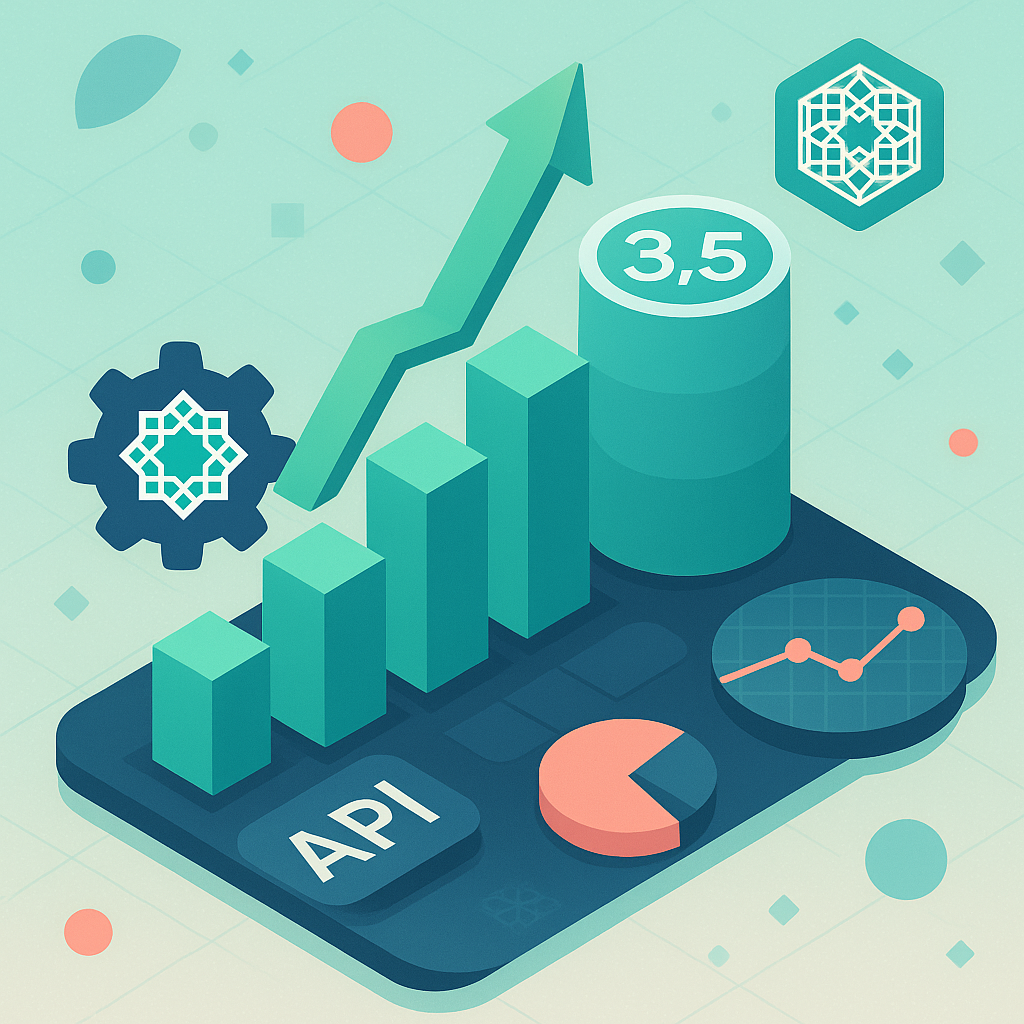
Saudi Arabia's API (application programming interface) market is on a steady growth trajectory, with IMARC Group reporting a rise from USD 2.2 billion in 2024 to a projected USD 3.5 billion by 2033. The consultancy forecasts a compound annual growth rate (CAGR) of 4.85% for the period 2025–2033, driven by a combination of regulatory change, cloud infrastructure expansion and Vision 2030–aligned industrial policy.
"Looking forward, IMARC Group expects the market to reach USD 3.5 Billion by 2033, exhibiting a growth rate (CAGR) of 4.85% during 2025-2033."
Context and drivers
IMARC Group ties the market outlook to several national initiatives and private-sector moves that are reshaping how organisations in the Kingdom build and consume APIs. Key industry enablers highlighted in the report include:
- Vision 2030 efforts to foster local pharmaceutical manufacturing and reduce import dependence, which are expanding demand for healthcare and pharmaceutical APIs and positioning Saudi Arabia as a regional production hub.
- Regulatory reform in financial services: the Saudi Arabian Monetary Authority (SAMA) moved open banking from trial to a fully supervised activity and in March 2026 issued open banking licences to fintechs including Lean Technologies, creating a new, API-driven payments and data-access market valued at about USD 43 billion as of early 2026.
- Major cloud and AI infrastructure rollouts, including the 2026 launch of Microsoft Azure and AWS data centre regions in the Eastern Province and Project Transcendence — a USD 100 billion programme underwriting 14 hyperscale campuses — which together underpin large-scale API consumption for AI workloads.
- Public sector digitisation: the Digital Government Authority reported an API maturity score of 86.71%, having unified 267 government platforms to enable single sign-on and cross-platform services.
- Data and AI coordination by SDAIA, which in February 2026 released guidelines for the Year of Artificial Intelligence to promote high-impact API integrations and data-driven government programmes.
The report also flags practical commercial signals: mandatory e-invoicing has digitised roughly 85% of national transactions, and public cloud expenditures in the Kingdom reached about USD 3.9 billion — conditions that create large volumes of structured data and low-latency compute available via APIs. Telecom and infrastructure partnerships such as the STC Group and HUMAIN joint venture are preparing next-generation data centres to host sustained AI loads, while corporate users such as ACWA Power are applying API-driven platforms to optimise utilities and operations.
Outlook
IMARC Group’s segmentation of the market underscores diverse routes to growth — from open, partner and internal APIs to RESTful, SOAP and GraphQL implementations — across verticals that include healthcare, financial services, retail, telecommunications and government. With national AI opportunity estimates near USD 310 billion and targeted incentives to attract global pharmaceutical and technology players, the Kingdom’s API market is expected to broaden in both scale and sophistication. For industry participants, the near-term emphasis will be on secure, low-latency integrations, compliance with new open banking rules, and exploiting hyperscale cloud facilities to deliver API-first digital services.
Stay in the loop
Join our weekly newsletter and get the latest MENA startup news, funding rounds, and insights delivered straight to your inbox.