Riyadh emerges as a Gulf refuge with Bahrain and Dubai under fire
Riyadh has emerged as an unexpected refuge for Gulf residents and travellers as missiles and drones threaten Bahrain and Dubai, with the Saudi capital offering relative safety and continuity of daily life.
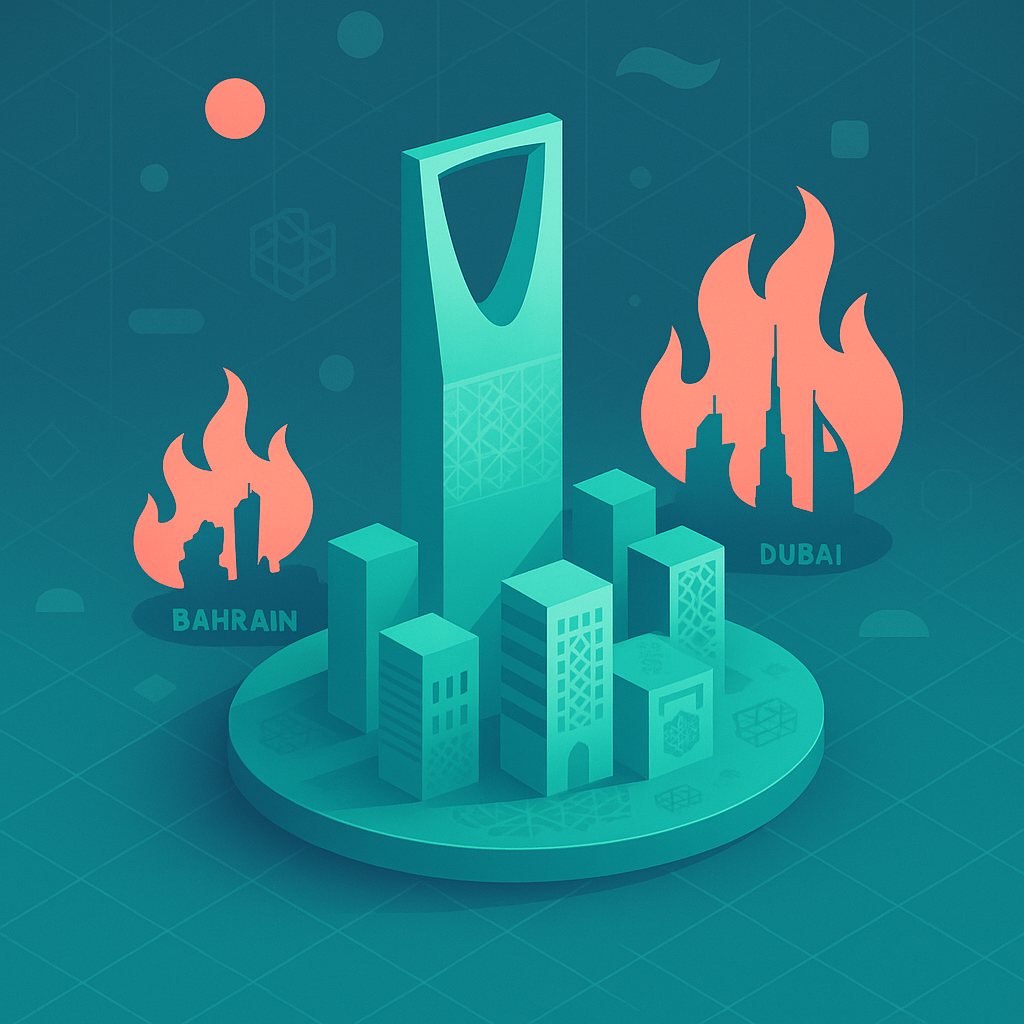
Riyadh has become an unexpected refuge for Gulf residents and travellers as missiles and drones cross the region’s skies, with the Saudi capital offering relative safety while Bahrain and Dubai face direct threats. Saudi authorities reported that two drones struck the US embassy in Riyadh on 3 March, causing a fire and minor damage but no injuries, and debris from intercepted drones sparked a small blaze at Aramco’s Ras Tanura refinery in the Eastern Province. Officials subsequently said Saudi air defences downed 10 drones and two cruise missiles “in three separate incidents,” and on Thursday three more cruise missiles and drones were destroyed near Al-Kharj, the city southeast of Riyadh closest to the Prince Sultan Air Base.
"Going to Bahrain was never really about going to watch a film, of course. It was about being elsewhere – and now elsewhere feels brittle."
Context and local changes
Once an austere administrative seat policed by the mutawa, Riyadh has been transformed over the past decade into a hyper-kinetic metropolis hosting festivals, heavyweight boxing, Formula 1 events and visits from global sports stars such as Cristiano Ronaldo. That domestic leisure build-out, alongside practical geography, helps explain why the capital is now a place of reassurance for many.
- The King Abdullah Financial District felt the first concussive snap of recent strikes as sound ricocheted off its façades, but life in Riyadh has largely carried on.
- Travel patterns have shifted: there has been a noticeable uptick in SUVs driving into Riyadh from the UAE and beyond as regional airspace reroutes force travellers to depart Dubai via Saudi Arabia.
- Bahrain’s Juffair district and Dubai’s Palm Jumeirah have long been weekend destinations for Saudis; the former sits on an island connected to Saudi by the 25km King Fahd Causeway, about a four-hour drive from Riyadh.
- Bahrain also hosts the US Navy’s Fifth Fleet headquarters, a rare naval base located close to a civilian nightlife district.
The juxtaposition is striking: Dubai and Doha lie much closer to the Gulf’s narrow shipping lanes and Iran’s launch points, while Riyadh sits deep in Saudi Arabia’s interior — roughly 600km from Iran’s coastline — and the kingdom stretches about 2,100km from the Red Sea to the Gulf. That added depth gives Saudi air-defence systems extra minutes to detect and intercept incoming threats before they reach the capital, security experts say. It also helps explain why attacks to date have concentrated on the Eastern Province, home to energy infrastructure such as Aramco’s Ras Tanura refinery.
Outlook
For now, daily life in Riyadh remains largely uninterrupted. Cinemas reopened in Saudi Arabia in 2018 after a more than 35-year hiatus, and the kingdom has expanded its own leisure ecosystem with cinemas anchoring major malls, music festivals on desert plateaus and beach clubs along the Red Sea. That domestic offer reduces the need to travel to Gulf leisure hubs — a factor that has become salient as “elsewhere feels brittle.”
The observations come from Scott Campbell, a Riyadh-based travel writer for Monocle, whose reporting captures the city’s sudden role as a place of refuge amid shifting travel routes and a contested regional airspace.
Stay in the loop
Join our weekly newsletter and get the latest MENA startup news, funding rounds, and insights delivered straight to your inbox.