New train to cut Dubai-Abu Dhabi travel time to under one hour
Etihad Rail is launching a national passenger network that will link 11 cities across the UAE and cut Abu Dhabi–Dubai travel time to as little as 50 minutes. The service is expected to begin phased passenger operations in 2026.
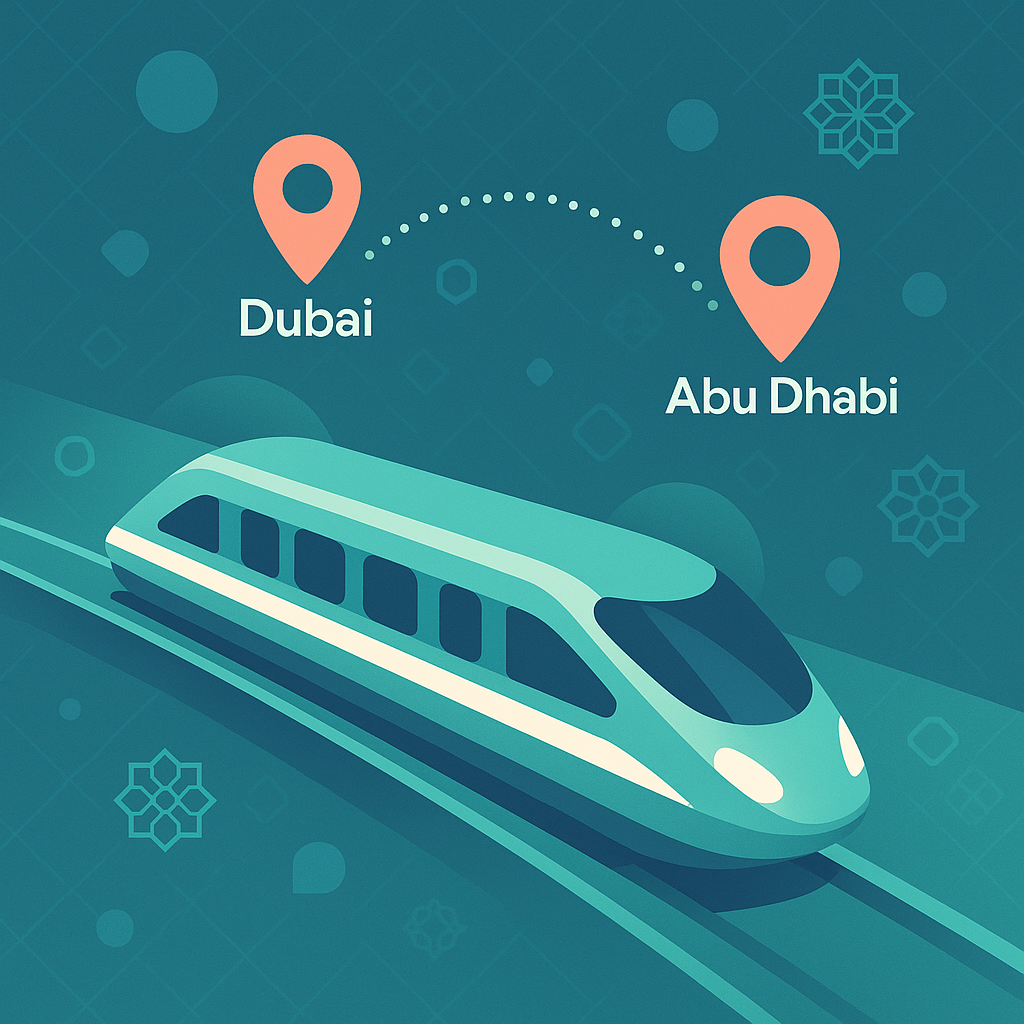
A new passenger rail service from Etihad Rail will cut travel time between Abu Dhabi and Dubai to as little as 50 minutes, offering a significant reduction from the current roughly 90‑minute journey by bus or car. Trains designed to operate at speeds of up to 125 miles per hour and carrying up to 400 passengers are due to enter service as Etihad Rail launches its national passenger network, with the company saying the service will officially launch in 2026.
"Our trains have been designed to offer a reliable, congestion-free alternative for intercity travel, with a focus on reducing journey times," said Mohammed Alshehii, chief projects officer at Etihad Rail.
Details of the network and rolling stock
Etihad Rail — which until now has focused on freight — has revealed plans for a fully integrated passenger system linking 11 cities and regions through strategically located stations. The operator announced the first four station locations as Abu Dhabi, Dubai, Sharjah and Fujairah, and later named the remaining planned stations as Al Sila', Al Dhannah, Al Mirfa, Madinat Zayed, Mezaira'a, Al Faya and Al Dhaid.
- Top speed: up to 125 miles per hour.
- Capacity: up to 400 passengers per train.
- Passenger amenities: safe and ergonomic seating, contemporary interiors, full Wi‑Fi coverage and individual power outlets at every seat.
- Fleet status: "Ten of the 13 trains in our fleet have arrived, where they have been tested and certified to the highest international safety and quality standards," Alshehii said.
Etihad Rail said the network will become operational in phases. In its first phase the company expects to connect 11 cities and areas “that have been carefully selected within key locations such as Mohammed Bin Zayed City in Abu Dhabi, Jumeirah Golf Estates in Dubai, University City in Sharjah and the Al Hilal area in Fujairah,” Alshehii added.
Context and national impact
Etihad Rail frames the passenger network as more than a transport upgrade: beyond cutting intercity journey times it is positioned to boost domestic tourism, reduce emissions by removing vehicles from the road, and strengthen social and economic ties by making travel between the Emirates quicker and more reliable. The operator said services will run on a precise and regular schedule to provide a dependable alternative to road travel affected by congestion.
Highlighting the scale of delivery, Alshehii described the project as the product of a multi‑year effort: "This achievement is the result of three years of intensive planning, design, and delivery, with total working hours reaching 24.5 million and the involvement of more than 7,000 experts and workers."
Outlook
As the fleet arrives and testing continues, Etihad Rail’s phased roll‑out aims to begin passenger operations in 2026. If schedules and integration with urban access points hold to plan, commuters and visitors could soon see Abu Dhabi–Dubai travel times cut to under an hour, with wider benefits for connectivity across the UAE as the network expands.
Related Startups
Related Founders
Stay in the loop
Join our weekly newsletter and get the latest MENA startup news, funding rounds, and insights delivered straight to your inbox.