Iran Threatens OpenAI’s $30B Abu Dhabi Stargate Data Center
Iran has threatened to destroy the $30B Stargate AI data center in Abu Dhabi, a facility backed by OpenAI, SoftBank, NVIDIA, and Cisco, raising geopolitical ala
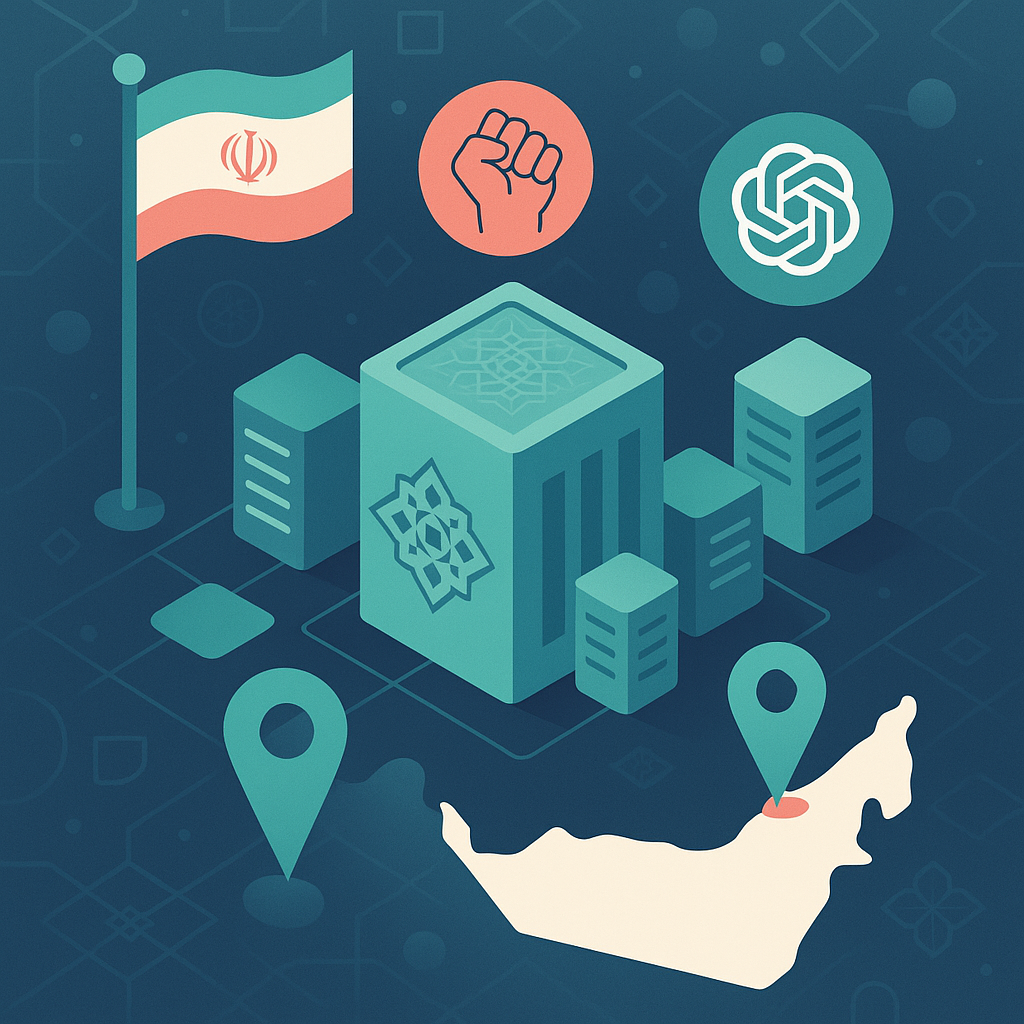
The United Arab Emirates’ $30 billion Stargate AI data center in Abu Dhabi — a facility backed by OpenAI, SoftBank, NVIDIA and Cisco — has been publicly threatened by an Iranian military‑linked account, according to reporting by Startup Fortune. The posts, circulated on social media in early April 2026, named the Abu Dhabi campus as a “legitimate military target,” escalating geopolitical tensions around one of the largest international AI infrastructure projects underway.
"The Abu Dhabi Stargate campus is one of the most significant pieces of AI infrastructure ever announced, forming a cornerstone of the broader Stargate initiative that OpenAI, SoftBank, and Oracle unveiled with considerable fanfare in January 2025," Startup Fortune wrote.
Stargate’s Abu Dhabi site is part of a broader program first announced in January 2025, and the UAE campus alone carries a projected investment of around $30 billion. NVIDIA is supplying GPU clusters for the build, Cisco is providing networking infrastructure, and SoftBank founder Masayoshi Son has served as a highly visible advocate for the project. The wider Stargate initiative also includes a large U.S. campus near Abilene, Texas, and SoftBank has committed $100 billion to the broader project.
Context and strategic significance
- Geopolitical backdrop: The threats follow months of rising tension in the Gulf and heightened U.S. partnerships with Gulf states on AI infrastructure — developments Tehran views as a security threat.
- UAE strategy: Abu Dhabi’s state‑linked conglomerate G42 has been central to the UAE’s ambition to position the country as a regional AI hub, accelerating partnerships with American AI firms since 2024.
- Dual‑use concerns: Security analysts warn that hyperscale AI data centers are increasingly considered strategic assets; a facility capable of training frontier models at scale can be viewed in adversarial calculus as a dual‑use installation.
Startup Fortune noted that "a flagship American AI project, physically located across the Gulf from Iranian territory and staffed with technology from companies like NVIDIA that remain subject to US export controls, represents a potent symbol." The article reports that neither OpenAI nor SoftBank had issued a formal public response to the threat as of the time of writing, and Cisco and NVIDIA were similarly silent. The UAE government also had not made a direct public statement addressing the posts.
Outlook — policy, commercial and security implications
If hostile rhetoric continues to attach to hyperscale AI builds in the Gulf, industry participants say the consequences could ripple through financing, construction and supply chains. Insurers, construction firms and hardware suppliers already factor political risk into project costs; sustained threats could raise premiums, slow deliveries or prompt reassessments of on‑the‑ground security requirements. Startup Fortune cautioned that what happens next "matters well beyond Abu Dhabi," noting that repeated targeting of AI data centers could complicate future builds by OpenAI, Microsoft, Google and others across the region.
For now, the Stargate project remains a focal point where advanced technology investment and regional geopolitics intersect — a convergence that project backers, host authorities and potential adversaries will continue to watch closely in the weeks ahead.
Stay in the loop
Join our weekly newsletter and get the latest MENA startup news, funding rounds, and insights delivered straight to your inbox.