India-UAE ties moving from co-investment to co-innovation and AI: UAE special envoy
The partnership between India and the UAE is evolving, moving past traditional investment opportunities into the vibrant realms of co-innovation and artificial intelligence. By exploring state-of-the-
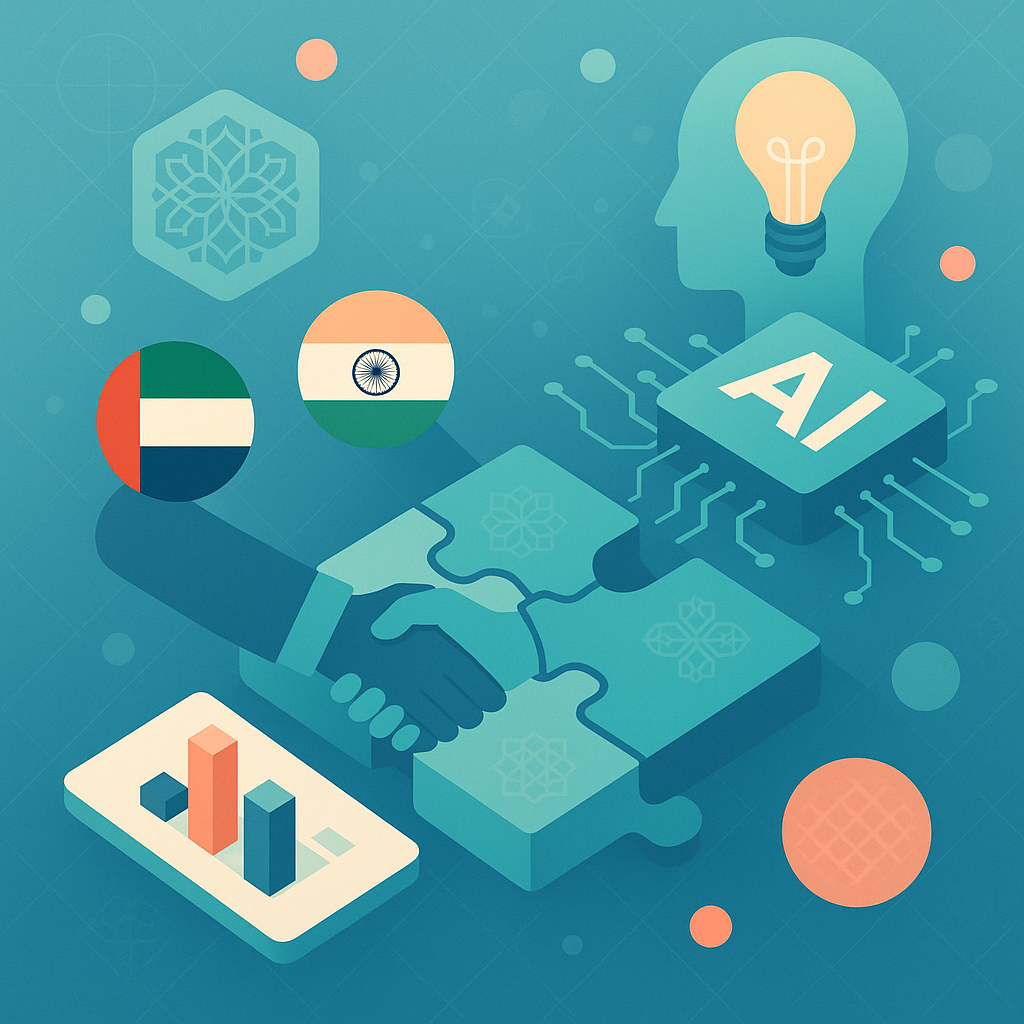
The strategic partnership between India and the United Arab Emirates is shifting from a focus on co-investment to active co-innovation, with artificial intelligence at the center of the new agenda, UAE special envoy Badr Jafar told The Economic Times during a visit to Delhi this week. Both countries are exploring cooperation in advanced computing capacity, modern data centres and AI-enabled services as part of a wider push to position the UAE‑India corridor as a creator of next‑generation technologies rather than merely a consumer.
"Together, we are exploring cooperation in advanced computing capacity, data centres and AI-enabled services‑positioning the UAE‑India corridor not merely as a consumer of AI, but as a co‑creator of its next phase," Jafar said.
Context and recent moves
- Badr Jafar is the UAE's special envoy for business and philanthropy and CEO of Crescent Enterprises. He underscored that the two economies bring complementary strengths: the UAE's early adoption of state AI institutions and India's digital public infrastructure and engineering scale.
- The UAE appointed the world's first minister of state for AI in 2017 and established the Mohamed bin Zayed University of Artificial Intelligence (MBZUAI) in 2019, the world's first AI‑dedicated university. The UAE expects AI to contribute about 14% to its GDP by 2030.
- India offers "extraordinary digital public infrastructure, engineering depth and scale," according to Jafar, creating a partnership dynamic that blends research, systems and market reach.
- On investment, CE‑Invests, the strategic investments platform of Crescent Enterprises, announced in November plans to deploy AED 1 billion (about $272 million) over the next three years across India, Southeast Asia and GCC markets.
- The broader India‑UAE economic corridor has accelerated rapidly since the Comprehensive Economic Partnership Agreement (CEPA) in 2022. "When the Comprehensive Economic Partnership Agreement was signed in 2022, it set a target of $100 billion in bilateral trade by 2030. That milestone was reached last year, five years ahead of schedule. At last month's presidential meeting, our leaders doubled the ambition to $200 billion by 2032," Jafar said, highlighting the speed and institutional alignment driving trade growth.
- Non‑oil trade between the two countries grew nearly 20% last year to reach $65 billion. UAE investors have deployed more than $22 billion in India across infrastructure, healthcare, financial services and renewables, while Indian investments in the UAE exceed $16 billion as companies set up manufacturing, relocate production lines and establish regional headquarters.
- Beyond AI, Jafar identified additional collaboration areas: advanced manufacturing, low‑carbon industries, clean energy and grid‑scale storage, digital infrastructure and fintech rails, healthcare innovation and biopharma supply chains, as well as smart logistics and trade platforms.
Outlook
Industry and government leaders on both sides now face the task of translating ambition into joint projects, regulatory frameworks and talent pipelines that enable the corridor to act as an R&D and commercial hub for AI and related technologies. With institutional commitments, targeted capital deployments such as CE‑Invests' AED 1 billion plan, and a rapidly expanding trade relationship that has already eclipsed initial CEPA targets, the UAE and India are positioning themselves to co‑create technology solutions across sectors — from clean energy systems to healthcare and fintech — over the coming decade.
Stay in the loop
Join our weekly newsletter and get the latest MENA startup news, funding rounds, and insights delivered straight to your inbox.