For Saudi Arabia, Qatar, and the UAE, Investment in AI Is Partly About U.S. Protection
In Saudi Arabia, Crown Prince Mohammed bin Salman has framed Riyadh’s push into AI around his broader Vision 2030 reform project, though it was not mentioned in the original document. A Saudi Data and
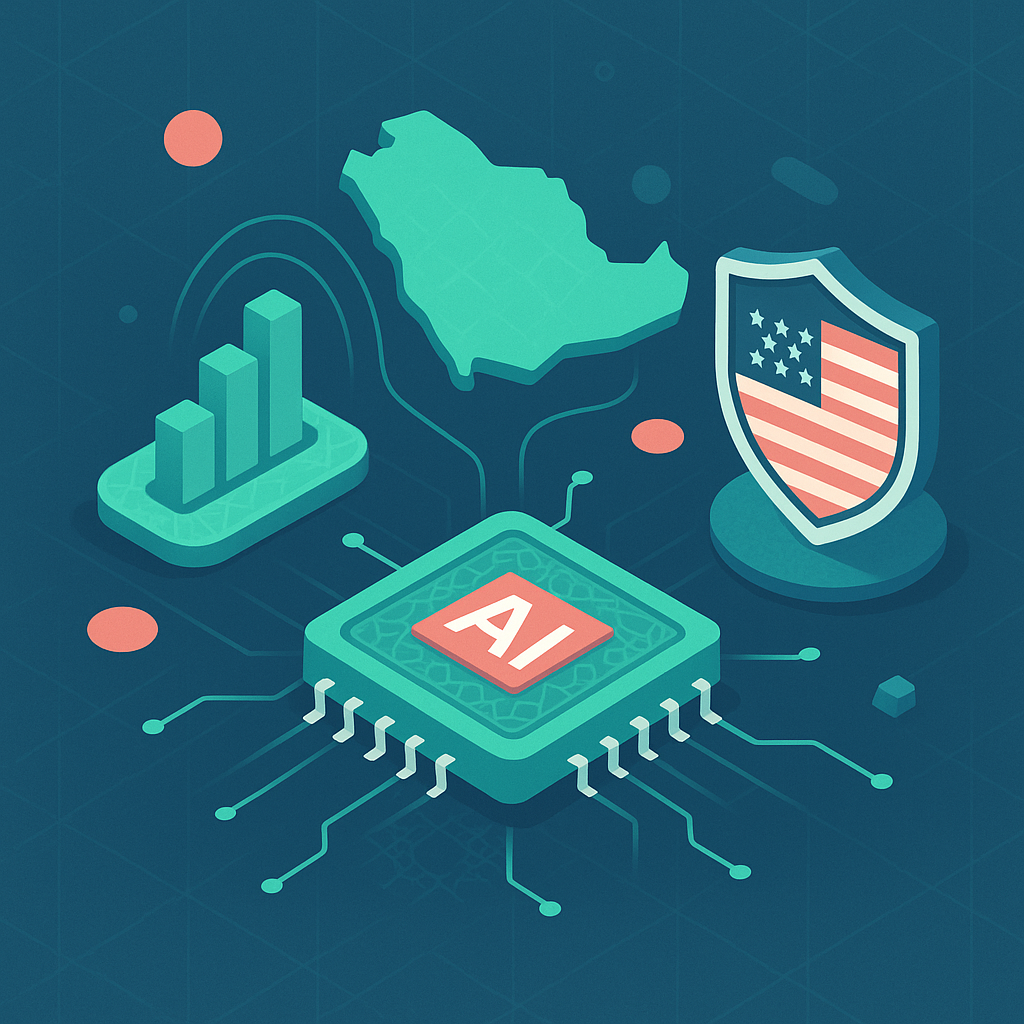
The three most influential Gulf states—Saudi Arabia, the United Arab Emirates, and Qatar—are pouring what Foreign Policy columnist Steven A. Cook describes as “hundreds of billions” into artificial intelligence as part of broader economic diversification and a strategic bid for security. Cook notes concrete steps: the UAE named a minister of state for artificial intelligence in 2017; Saudi Arabia created a Saudi Data and AI Authority in 2019 and announced a national AI strategy in 2020 while the Public Investment Fund only launched an AI company, Humain, in 2025; and Qatar, after forming an AI committee in 2021, saw the Qatar Investment Authority establish the national AI company Qai late last year.
"AI is the mother of all insurance policies," Cook writes, reflecting how Gulf leaders view the technology as both an economic lever and a geopolitical hedge.
Context and recent moves
- United Arab Emirates: early mover with a 2017 minister of state for artificial intelligence and large data-center projects such as the Stargate initiative under construction in Abu Dhabi (photographed during the International Petroleum Exhibition and Conference on Nov. 3, 2025).
- Saudi Arabia: Crown Prince Mohammed bin Salman has framed AI within Vision 2030; the Saudi Data and AI Authority was created in 2019 and announced a strategy in 2020. The sovereign wealth fund, the Public Investment Fund, launched Humain in 2025, while Saudi Aramco has applied AI internally for operational gains for a longer period.
- Qatar: after establishing an AI committee in 2021 and prioritizing media and education investments, the Qatar Investment Authority created Qai in late 2025 to centralize national AI ambitions.
Cook emphasizes that these moves are not purely economic. Gulf states are actively courting U.S. tech firms—Google, Microsoft, OpenAI and others—to become “critical partners.” He argues that such partnerships carry an implicit security dividend: "If they become critical partners with some of the United States’ biggest tech companies in artificial intelligence, it is a lock that the United States will guarantee their security." That calculation echoes past strategic relationships in the region: Cook points to Al Udeid Air Base, located about 25 miles west of Doha, which Qatar built in the mid-1990s to attract U.S. forces. The United States began using Al Udeid after 9/11 and by 2003 had shifted most of its forces from Saudi Arabia to Qatar; the base later hosted U.S. Central Command operations in Iraq and Afghanistan and was a reception point for Afghan allies evacuated during the 2021 Kabul withdrawal.
Cook also frames the Gulf push in the wider great-power competition over AI, citing U.S. policy priorities: there is “no coming in second in AI,” and Washington is committed to "winning the [AI] race," language deployed by the White House to describe U.S. objectives.
Outlook
For Riyadh, Abu Dhabi, and Doha, investment in AI is thus dual-purpose: a bet on post-hydrocarbon economic transformation and a strategic lever to deepen ties with Washington by embedding themselves in the AI ecosystems of major U.S. technology companies. Whether that calculus will deliver the security guarantees Gulf leaders expect remains an open question, but Cook’s analysis underscores a durable link between technological partnership and geopolitical shelter in the Middle East.
Stay in the loop
Join our weekly newsletter and get the latest MENA startup news, funding rounds, and insights delivered straight to your inbox.