Egypt Advances $570 Million SAF Project in Alexandria Targeting 120,000 Tonnes Output by 2029
For investors and project stakeholders, this phase is critical. Securing competitive financing, managing construction timelines, and ensuring feedstock supply stability will all influence whether the
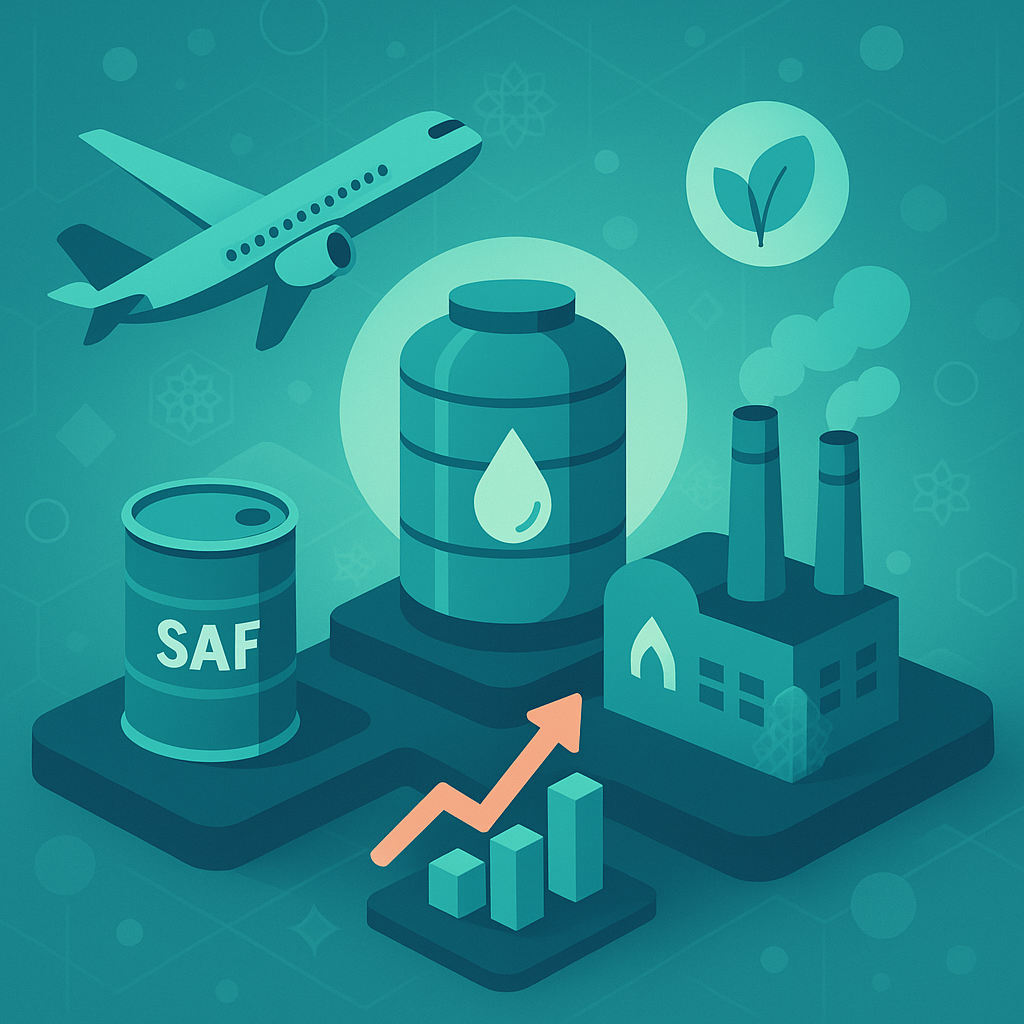
Egypt has advanced a $570 million sustainable aviation fuel (SAF) project in Alexandria that aims to produce 120,000 tonnes of SAF annually by 2029, the Egyptian Petrochemicals Holding Company (ECHEM) and its subsidiary Egyptian Sustainable Aviation Fuel Company (ESAF) confirmed. The facility will use waste-based feedstocks — primarily used cooking oil — and relies on a technology partnership with US-based Honeywell UOP. ECHEM said permitting, contracting and financing are "actively progressing" as the project moves toward a targeted 2029 commercial start-up.
"According to official estimates, the facility could cut up to 400,000 tonnes of CO2 emissions annually once operational," the developers say, underscoring the project's emissions-reduction potential if it achieves full capacity.
Project structure, technology and partners
The Alexandria plant is being developed by ESAF, a subsidiary of ECHEM, and is backed by a licensing and technology agreement with Honeywell UOP. That December 2025 agreement — intended to deploy advanced hydrotreating conversion technology capable of processing waste-based inputs into jet fuel — was signed by ESAF Chairman Tamer Heikal and Honeywell’s Matt Spalding, Vice President for Honeywell Energy and Sustainability Solutions (ESS) for Asia Pacific, Middle East, North Africa and India.
- Investment: $570 million.
- Planned annual output: 120,000 tonnes of SAF by 2029.
- Primary feedstock: used cooking oil (waste-based inputs).
- Estimated emissions reduction: up to 400,000 tonnes of CO2 per year (official estimates).
- Technology licensor: Honeywell UOP (licensing agreement signed December 2025).
Execution challenges and market headwinds
Developers warn the current phase is critical. ECHEM confirmed financing arrangements are in progress and key contracts are being finalized, but the project still faces typical execution risks for large-scale SAF plants. Process licensor selection remains ongoing, meaning final technical configurations have not yet been locked in. For investors and stakeholders, securing competitive financing, meeting construction timelines and guaranteeing a stable feedstock supply will be decisive factors for reaching the 2029 start target.
The project also enters a difficult global market context: the International Air Transport Association (IATA) has revised its 2025 SAF production estimate down to 1.9 million tonnes, citing insufficient policy support. IATA noted a persistent pricing gap, estimating SAF costs roughly twice conventional jet fuel and up to five times higher in markets with blending mandates — dynamics that could constrain airline offtake and slow demand growth despite tightening decarbonization commitments.
Outlook
If delivered on schedule and at competitive cost, the Alexandria facility would position Egypt within the global SAF supply chain and bolster the country’s role in regional low-carbon fuel production. Success will hinge on translating the current “advanced development phase” into secured finance, finalized technology contracts and reliable waste-oil feedstock streams. Policymakers, investors and regional carriers will be watching closely to see whether the project can bridge the gap between climate ambition and market realities and become a model for SAF development in emerging markets.
Stay in the loop
Join our weekly newsletter and get the latest MENA startup news, funding rounds, and insights delivered straight to your inbox.