Dubai-it and the Making of a Global Model City: How Dubai Became the Benchmark for Urban Transformation
The article describes Dubai's evolution into a global model for rapid, execution-focused urban transformation—branded 'Dubai-it'—highlighting sector diversification, connectivity and institutional capacity under Sheikh Mohammed bin Rashid Al Maktoum. It positions Dubai as a template for other governments seeking fast, high-quality development.
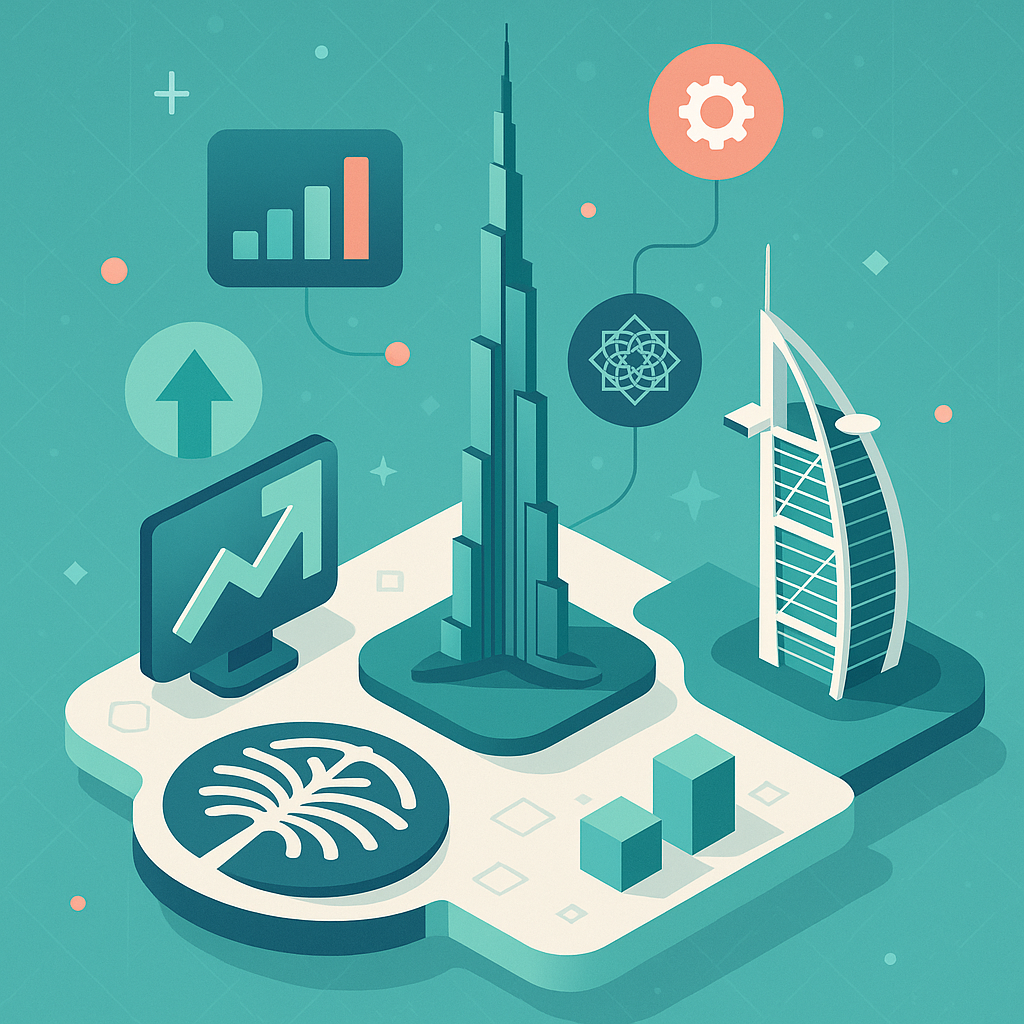
Dubai has evolved from a regional trading port into a global model for rapid urban transformation, a shift formalised in June 2026 when His Highness Sheikh Mohammed bin Rashid Al Maktoum introduced the concept of “Dubai-it.” The emirate now markets itself less as a collection of landmarks and more as a diversified, globally connected economy spanning trade, logistics, aviation, finance, technology, tourism, healthcare, education and professional services. More than 200 nationalities live and work in the city, which positions itself as a launchpad into the Middle East, Africa, South Asia and the wider Global South.
Sheikh Mohammed framed the idea succinctly: “to achieve something extraordinary with excellence in record time.”
That formulation captures a governance philosophy that prioritises execution as much as ambition. Under Sheikh Mohammed’s leadership, Dubai has repeatedly reinvented its economic model—creating free zones, investing in digital government and smart-city infrastructure, and building a global logistics hub out of a modest Gulf port. The result is an urban economy designed to absorb geopolitical shocks without depending on a single sector or market.
What “Dubai-it” means in practice
- Execution-focused governance: Projects move from concept to implementation rapidly, with an emphasis on speed, quality and visible results rather than prolonged planning cycles.
- Sector diversification: Authorities have cultivated sectors beyond real estate and tourism—finance, aviation and technology are central pillars alongside education, healthcare and professional services.
- Connectivity and institutions: Long-term investments in ports, airports, free zones and digital infrastructure underpin Dubai’s role as a regional and global platform for capital and talent.
- Social positioning: The city promotes tolerance, religious coexistence, safety and multiculturalism, which helps attract global talent and investment—factors underscored by its citizenry of over 200 nationalities.
Observers say the appeal of Dubai is not simply its skyline but the values it projects: openness in a region often associated with political uncertainty, predictability amid disruption, and pragmatism over ideology. This mix has made Dubai a reference point for policymakers from the Gulf to Central Asia and Africa, who increasingly seek to “Dubai-it”—adopting elements of the emirate’s playbook such as free zones, logistics corridors, aviation hubs and digital government while adapting them to local circumstances.
Analysts note an important distinction: the goal for many imitators is not to replicate Dubai’s architecture but to emulate its management philosophy. The city’s peers today are global hubs such as Singapore, Hong Kong, London and New York—cities judged against Dubai on criteria like regulatory adaptability, delivery speed and the ability to translate strategic visions into tangible outcomes within years rather than decades.
Outlook
Dubai’s model faces ongoing scrutiny and scepticism, yet its influence is clear: the term “Dubai-it” has entered the policy lexicon as shorthand for rapid, high-quality urban transformation. As governments and investors worldwide look to emulate elements of the emirate’s approach, the central test will be whether those jurisdictions can replicate not only Dubai’s projects but the institutional capacity to execute them at pace while maintaining quality and social openness—precisely the balance Sheikh Mohammed’s definition of “Dubai-it” seeks to enshrine.
Stay in the loop
Join our weekly newsletter and get the latest MENA startup news, funding rounds, and insights delivered straight to your inbox.