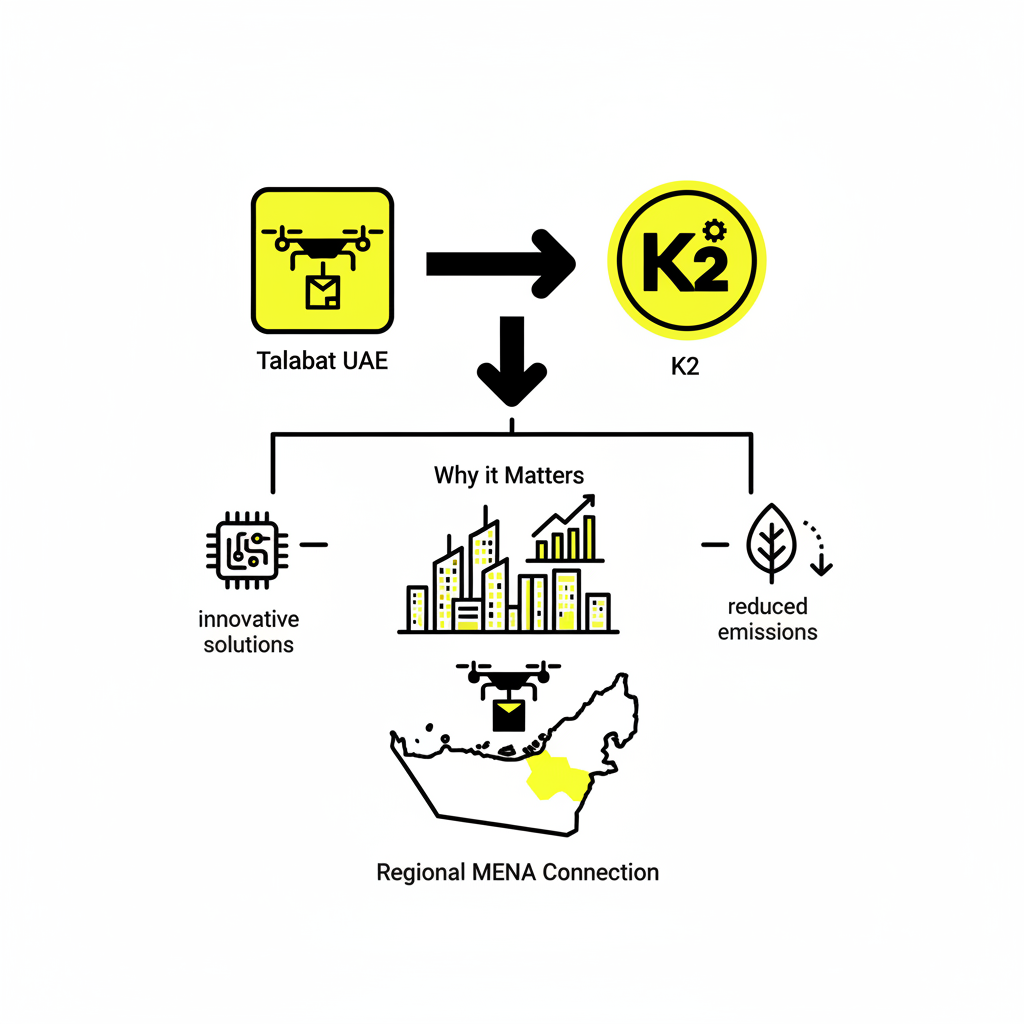
The future of last-mile logistics in the Middle East is rapidly ascending, quite literally. In a move set to redefine urban delivery, talabat UAE, the region's leading on-demand delivery platform, has inked a Memorandum of Understanding (MoU) with K2, an Abu Dhabi Government-owned advanced technologies company, to pilot a commercial drone delivery service for food and groceries. This groundbreaking partnership signals a significant stride towards integrating autonomous solutions into the everyday fabric of MENA's smart cities.
Redefining Last-Mile Efficiency with Autonomous Skies
The collaboration between talabat and K2 is more than just a headline; it's a strategic exploration into innovative last-mile delivery solutions aimed at tackling some of the most pressing challenges in urban logistics. The core of this initiative is a "drone-to-station" model, where drones will transport orders to local hubs, or designated drop-off stations, with existing talabat riders handling the final short leg to the customer's doorstep. This approach seeks to marry the speed and efficiency of aerial delivery with the established ground network, optimizing for both rapid transit and customer accessibility.
Mayank Khaitan, Director of Logistics at talabat, highlighted that this partnership is a crucial step in exploring autonomous delivery capabilities to make operations smarter, safer, and more efficient. The goal is clear: to boost delivery speed, substantially cut operational emissions, and alleviate pressure on riders in high-demand areas. This commitment aligns perfectly with global pushes for sustainable urban development and reducing the carbon footprint of logistics.
K2's Vision and the UAE's Autonomous Ambitions
K2, known for its expertise in robotics and autonomous mobility, is integrating this drone delivery pilot into its broader smart-city and autonomous mobility ecosystem in Abu Dhabi. Waleed AlBlooshi, Vice President of Strategy at K2, emphasized that this collaboration proves autonomy is no longer a concept but a real service improving daily life. Initial trials for the service were already underway at the DRIFTx event during Abu Dhabi Autonomous Week, showcasing the rapid pace of development. The pilot drones are designed with a payload capacity of 10 to 20 kg and a flight range of approximately 5 to 10 km, featuring custom climate-resistant packaging to preserve food quality in the UAE's challenging climate.
The UAE has been a fervent proponent of embracing advanced air mobility, with regulators actively sketching air lanes for drones and air taxis. Dubai, for instance, has an ambitious plan to have drone delivery cover 30% of the city by 2026. Abu Dhabi is also at the forefront, with entities like TII, Aspire, and the General Civil Aviation Authority (GCAA) pioneering a regulatory framework for autonomous flying taxis and delivery drones through advanced simulations and real-world pilot zones. This forward-thinking regulatory environment is critical for scaling such innovative services beyond initial pilots.
Impact on the MENA Last-Mile Landscape
This initiative by talabat and K2 is set to have a ripple effect across the MENA region. The last-mile delivery sector in the Middle East has been booming, with e-commerce experiencing significant growth. However, this growth also brings challenges related to traffic congestion, operational costs, and environmental impact. Drone delivery offers a compelling solution by bypassing road traffic, reducing travel times, and utilizing electric-powered systems to lower emissions.
The "drone-to-station" model could also potentially enhance the efficiency and safety of existing delivery riders by shortening their routes and allowing them to focus on high-density areas. This synergy between autonomous aerial delivery and human-centric last-mile operations presents a scalable and sustainable blueprint for urban logistics. The successful implementation of this pilot could pave the way for wider adoption across other MENA cities, further cementing the region's position as a hub for technological innovation in logistics.
Editor’s Note — The Startups MENA Team
At Startups MENA, we chronicle the shifts shaping the region’s innovation economy. The partnership between talabat UAE and K2 to pilot commercial drone delivery transcends a simple business announcement; it spotlights a global trend where autonomous systems are increasingly integrated into daily life. The Middle East, with its strategic investments in advanced infrastructure, a clear vision for technological sovereignty, and proactive regulatory partnerships, is actively positioning itself as an architect of this future. This isn't merely about adopting technology; it’s about capability building and co-designing solutions that are tailored to the region's unique urban landscapes and environmental considerations. This move underscores a pivotal shift in the technology landscape, demonstrating the region's rising role from a consumer of innovation to a critical contributor and definer of next-generation solutions in logistics and smart cities.
— The Startups MENA Editorial Team