Chinese tech firms deepen ties in Saudi Arabia
Chinese tech firms are expanding commercial and infrastructure projects in Saudi Arabia, including plans for up to 10,000 WeRide robotaxis, Tencent Cloud obtaining a Saudi operating license, HUMAIN commissioning an Arabic model from MiniMax, and Lenovo planning local laptop mass production.
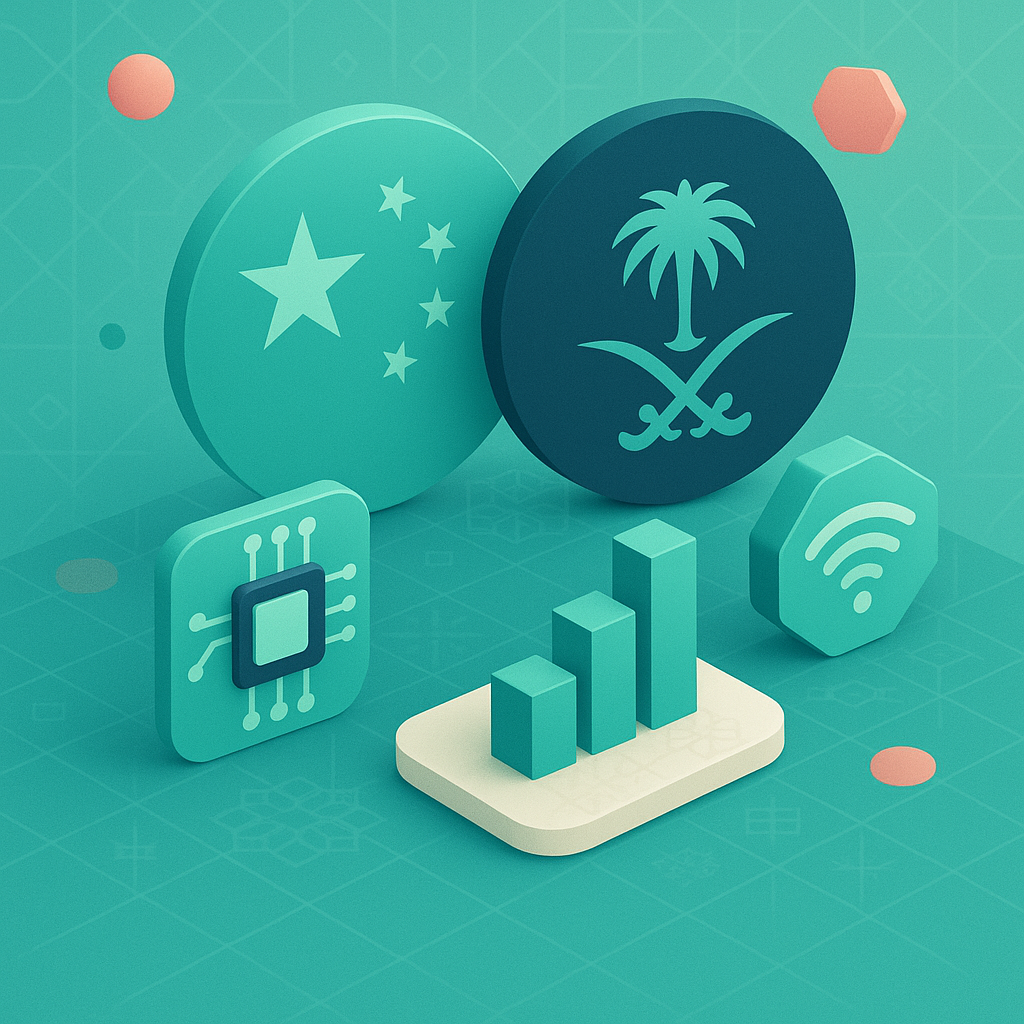
Chinese technology companies are accelerating a wave of commercial and infrastructure projects in Saudi Arabia, announcing deals that span robotaxis, AI models, cloud licenses, and local hardware production. Key commitments unveiled during a major Riyadh tech event include WeRide's plan to add up to 10,000 robotaxis in the kingdom; Tencent Cloud securing a Saudi operating license after investing roughly $150 million to date; Lenovo moving to mass-produce a newly unveiled laptop in Riyadh by year-end; and the Public Investment Fund–backed HUMAIN commissioning an Arabic-language model from China’s MiniMax while tying future investment to on‑shore compute capacity.
“It is a really important focal point for China to show the whole world, not just the region, that its tech is often better to buy and to operate than US tech,” said James Kynge, senior research fellow for China and the world at Chatham House.
Context and details
Senior Saudi officials at the Riyadh press conference that launched the tech summit hailed deepening scientific and commercial ties with China. Analysts and executives say the new phase differs from past approaches: Chinese firms are now explicitly tasked with international expansion and are being incentivized to establish local operations.
- Robotaxis: WeRide announced ambitions to scale its fleet in Riyadh to as many as 10,000 vehicles, positioning autonomous mobility as a visible example of Chinese tech deployment in the kingdom.
- Cloud and data centers: Tencent Cloud obtained a Saudi operating license to serve government and finance clients, building on about $150 million the company has already invested in Saudi Arabia. Meanwhile, US cloud provider AWS is continuing its own expansion, with some $5.3 billion earmarked for data centers in the kingdom.
- AI models and compute: HUMAIN, affiliated with the Public Investment Fund, has commissioned an Arabic-language model from China’s MiniMax. HUMAIN’s leadership has said it will not allow Chinese frontier AI models to be trained on its Saudi compute; instead the firm will offer access to Chinese open-source models on its local data centers. HUMAIN’s CEO also told reporters the firm will link venture fund investments to available computing power in Saudi Arabia.
- Hardware manufacturing: Lenovo is on track to begin mass production of a laptop unveiled at the Riyadh event before the end of the year, signalling moves to localise hardware assembly and supply chains.
- Regional manufacturing and EVs: Chinese EV maker Rox Motors has begun producing cars in Abu Dhabi and plans to unveil its first UAE-designed model next year.
Beijing-based academic Karim Alwadi characterized the growth as sweeping. “People don’t appreciate how big this is, it’s a tsunami,” he said, urging firms and investors to “Ride the wave.” Analysts note that the Gulf can serve both as a gateway to the Global South and as a pool of co-investment from state-backed funds and family offices that help offset high-tech costs.
Outlook
The unfolding deals place Saudi Arabia at the intersection of competing tech ecosystems. Observers expect the kingdom to become a showcase for Chinese AI, telecoms, and mobility offerings across the Gulf and beyond, while US firms maintain a strong presence in core infrastructure. How Riyadh balances foreign partnerships, local computing restrictions, and its Vision 2030 ambitions will determine whether these arrangements translate into lasting industrial capacity and competitive advantage for the kingdom.
Related Startups
WeRide
Chinese autonomous mobility company planning to scale robotaxi fleet in Riyadh to as many as 10,000 vehicles.
Tencent Cloud
Cloud provider that secured a Saudi operating license and has invested roughly $150 million in Saudi Arabia to serve government and finance clients.
Humain
AI company focused on Arabic-first AI models and regional language and culture, backed by the Public Investment Fund.
MiniMax
Chinese AI model developer commissioned to build an Arabic-language model for HUMAIN.
Lenovo
Hardware manufacturer planning to mass-produce a newly unveiled laptop in Riyadh by year-end to localize assembly and supply chains.
Rox Motors
Chinese electric vehicle maker producing cars in Abu Dhabi and planning to unveil its first UAE-designed model next year.
AWS
U.S. cloud provider continuing expansion in Saudi Arabia with planned multibillion-dollar data center investments.
Related Founders
Mona Almehaid
Vice President
Mohammed bin Salman
Crown Prince
Tariq Amin
Chief executive
Abdullah Alswaha
Minister of Communications and Information Technology
Tareq Amin
Chief Executive Officer
Ayman Al‑Ghamdi
President
Dr. Lisa Su
Chair and CEO
Vipul Prakash
CEO and co-founder
Qasar Younis
Co-founder & CEO
Eng. Tareq Amin
CEO
Eng. Bassam Albassam
Head, Cloud Computing and AI Enablement Office
Shantanu Narayen
Chairman and CEO
Dr. Esam Alwagait
Director
Unnamed HUMAIN CEO
CEO
Stay in the loop
Join our weekly newsletter and get the latest MENA startup news, funding rounds, and insights delivered straight to your inbox.