AIM Congress 2026: Africa Courts Gulf Investors to Drive Industrial Growth Beyond Extraction
At AIM Congress 2026 in Dubai the Africa Pavilion convened African leaders, GCC sovereign funds and investors to turn AfCFTA, critical minerals and renewable energy potential into bankable industrial projects. Organisers emphasised deal rooms and match-making to channel Gulf capital into downstream processing, refining and manufacturing across Africa.
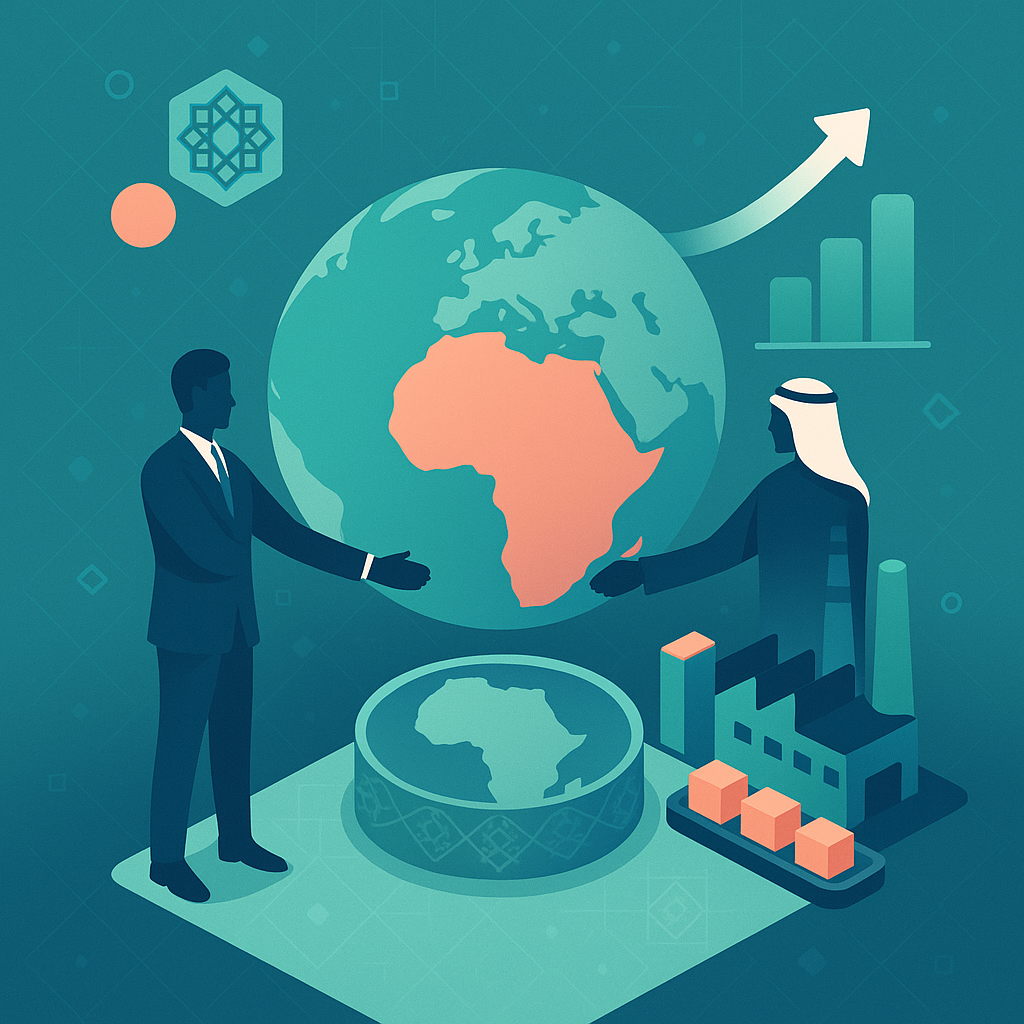
At the AIM Congress 2026 in Dubai, the Africa Pavilion convened African leaders, sovereign fund managers and Gulf investors with an explicit aim: turn the Africa Continental Free Trade Area (AfCFTA), critical minerals and renewable energy potential into bankable industrial projects rather than remain a forum for memoranda. Delegates highlighted concrete figures: AfCFTA now counts 50 ratifying countries representing roughly 1.4 billion people and a combined GDP of $3.4 trillion, while the UAE invested more than $110 billion in African projects between 2019 and 2023 — more than $70 billion of that in green energy and renewables.
“The AFCFTA, the Africa Continental Free Trade Area, is now in implementation mode,” said Wamkele Mene, Secretary-General of the AfCFTA Secretariat, framing the pact as the structural backbone for larger investments into refining, manufacturing and intra-African trade.
The Africa Pavilion, hosted by the Africa GCC Council and chaired by Dr. M'zée Fula Ngenge, was structured as an operational ecosystem: curated deal rooms, ministerial roundtables and facilitated introductions that aim to accelerate direct project financing. Organisers stressed a shift “from visibility to outcomes,” prioritising practical match-making between African project sponsors and Gulf sovereign funds, family offices and institutional investors. The pavilion drew ministers, mining executives and entrepreneurs, including Uganda’s Prime Minister Robinah Nabbanja and Naseem Banu Lahri, Managing Director of Lucara Botswana.
Panels combined strategic priorities across regions. Uganda’s Robinah Nabbanja underscored landlocked countries’ potential, noting investment opportunities despite having “no direct access to the sea.” Ethiopia’s President Taye Atske-Selassie highlighted his country’s large renewable resource base: “We have a total potential of 60,000 megawatts only from renewable sources and our aim is to reach a target of 50,000 megawatts by 2030,” he said, linking power expansion to industrial scaling across East Africa.
Minerals emerged as the core economic argument. Mene emphasised Africa’s endowment in copper, cobalt, lithium and bauxite and argued the priority is to move beyond raw commodity exports to build refining and manufacturing capacity on the continent. That emphasis aligns with recent GCC capital flows: the UAE’s reported $110 billion in African investments between 2019 and 2023 — including over $70 billion in renewables — positions Gulf investors as key partners for downstream industrialisation, not just upstream extraction.
Capacity building and entrepreneurship were also on display. Ngwi Njikta, Director of Entrepreneurship Program and Board Chair of the F&F Young Women Entrepreneurship Development Organisation (FYWEDO), outlined practical support for SMEs and women-led ventures. She said the organisation’s Federal Economic Exchange Program “enables African women entrepreneurs, who are ready to scale international market to be able to facilitate. We facilitate for them to meet companies in their fields, get mentorship, and assess markets, especially in the GCC and Gulf area, Middle East.” FYWEDO has collaborated with eight companies in the GCC and Middle East region during its three years of activity.
Outlook
- AfCFTA’s full implementation and the Pavilion’s deal rooms aim to convert diplomatic engagement into signed contracts and financed projects.
- Gulf capital — already a major investor in African renewables and infrastructure — is being courted to finance downstream activities: processing, refining and manufacturing tied to critical minerals.
- Success will hinge on translating AfCFTA scale (1.4 billion people; $3.4 trillion GDP) and identified renewable potential into bankable project pipelines that meet sovereign funds’ return criteria.
Related Startups
F&F Young Women Entrepreneurship Development Organisation (FYWEDO)
Organisation supporting women-led SMEs with mentorship, market access and partnerships in the GCC and Middle East.
Africa GCC Council / Africa Pavilion
Regional convenor and organiser of the Africa Pavilion at AIM Congress, facilitating deal rooms and project matchmaking between African sponsors and Gulf investors.
Related Founders
Stay in the loop
Join our weekly newsletter and get the latest MENA startup news, funding rounds, and insights delivered straight to your inbox.