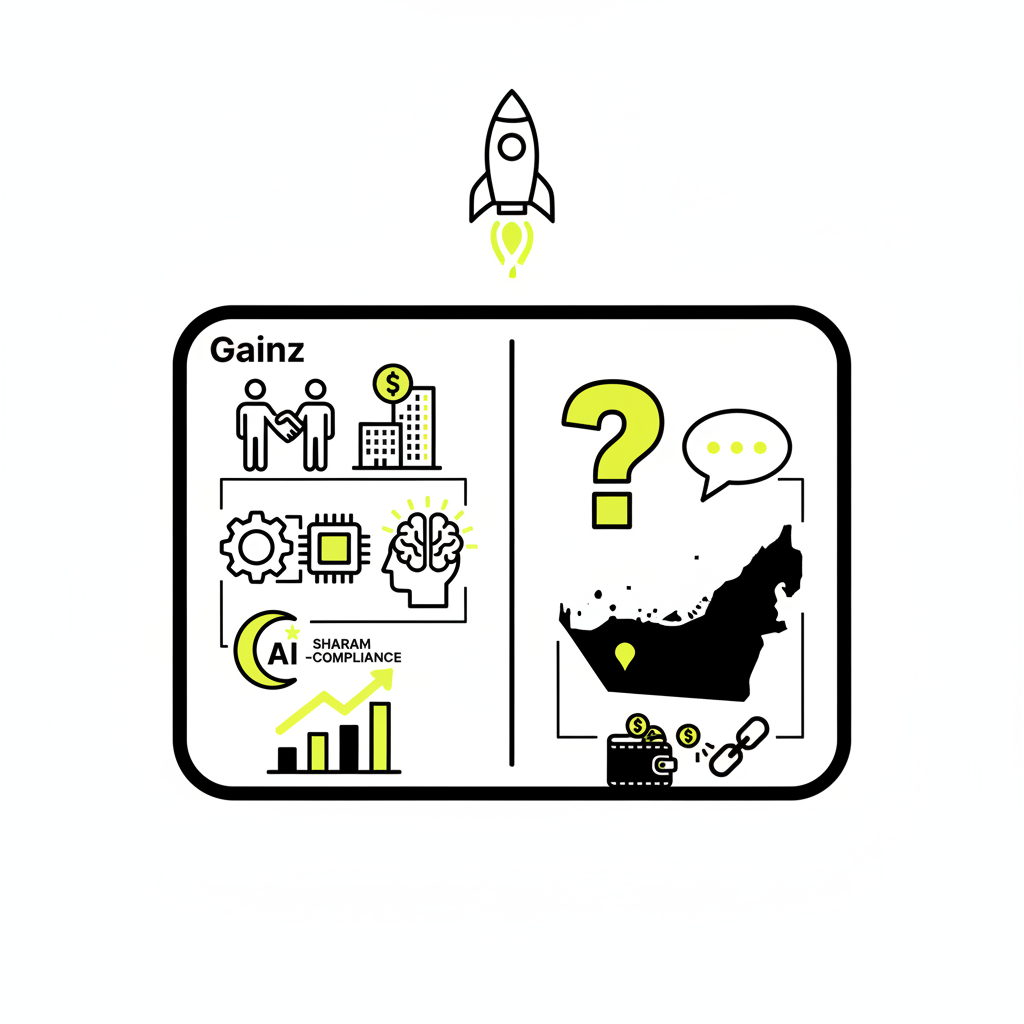
The Middle East and North Africa (MENA) region is a hotbed of entrepreneurial activity, yet a persistent challenge looms large for its vibrant small and medium-sized enterprises (SMEs): access to adequate financing. Traditional lending models often fall short, leaving a significant gap that innovative fintech solutions are now stepping up to fill. Among the new guard making waves is Gainz, a UAE-based startup that is swiftly positioning itself as a key player in democratizing SME lending through an AI-powered, Shariah-compliant crowdfunding platform.
The Unmet Potential: MENA's SME Financing Gap
SMEs are the economic engine of the MENA region, forming the backbone of economic diversification and job creation. In the UAE alone, these businesses constitute over 95% of registered enterprises, employ 86% of the private sector workforce, and contribute more than 64% to the non-oil gross domestic product. Despite their crucial role, SMEs face immense hurdles in securing capital. The financing gap for MSMEs in MENA is estimated to be between $210 billion and $240 billion, with formal MSMEs facing a shortfall of $160-180 billion. A staggering statistic reveals that only about 8% of total bank lending in MENA goes to SMEs, a figure that drops to a mere 2% in GCC countries, significantly lower than global averages. This structural impediment has long stifled growth, with traditional loan approval processes often dragging on for months.
Gainz: A Dual-Powered Solution for a Critical Need
Enter Gainz, founded in December 2024 by serial entrepreneurs Shehab Mokhtar and Sherif Abdelaty. Recognizing this colossal unmet demand, Gainz has engineered a solution that combines cutting-edge artificial intelligence with the ethical principles of Shariah-compliant finance, delivered through a crowdfunding model. Their platform is designed to make working capital financing accessible for SMEs, while simultaneously opening up investment opportunities for individuals with low entry thresholds, starting from as little as $500.
The Edge of AI-Driven Underwriting
The integration of AI is central to Gainz's innovative approach. Artificial intelligence is rapidly transforming the fintech landscape in the Middle East, with investments in AI for financial services projected to reach $200 billion globally by 2025. The UAE, a leader in AI adoption, commanded approximately 40% of the Middle East AI in finance market share in 2024, demonstrating a clear appetite for technological advancement in the sector. Gainz leverages AI-powered underwriting to streamline credit assessment, significantly reducing the time it takes for SMEs to secure funding from months to mere days. This not only enhances efficiency but also allows for more sophisticated risk profiling, potentially improving approval rates and reducing default risks by up to 20%.
Shariah-Compliance: A Strong Local Fit
Beyond technological prowess, Gainz's commitment to Shariah-compliance provides a strong local fit within the GCC. This adheres to Islamic finance principles, which emphasize ethical and socially responsible investments, eliminating interest rates (riba) and promoting fair benefit distribution. The region has seen a growing interest in Shariah-compliant crowdfunding, with other platforms and even government initiatives supporting this segment. By aligning with these values, Gainz taps into a broad base of investors seeking ethical investment avenues and provides culturally sensitive financing options for businesses.
Early Traction and Future Horizons
The market has already responded positively to Gainz's vision. In May 2025, the startup successfully closed a seven-figure USD pre-seed funding round, a mix of equity and debt. The round saw participation from prominent investors, including Antler MENAP, Lithium Holdings, and Eleventh Invest Inc., alongside a network of high-net-worth individuals across the region. This investment underscores strong confidence in the founding team's extensive track record, with both Mokhtar and Abdelaty bringing over two decades of experience in building and scaling companies.
During its Minimum Viable Product (MVP) testing phase in Q2 2025, Gainz demonstrated impressive early traction, facilitating seven deals and disbursing nearly $400,000 in loans. The new capital injection will be instrumental in scaling the Gainz platform, expanding its regional footprint across the GCC, and continuing to innovate in alternative lending solutions.
As the MENA fintech market continues its explosive growth, projected to reach $10.26 billion by 2030, platforms like Gainz are not just bridging a financing gap; they are actively shaping a more inclusive, efficient, and regionally attuned financial ecosystem. The blend of advanced AI with Shariah-compliant principles represents a powerful formula for success in a market ripe for disruption and primed for growth.
Editor’s Note — The Startups MENA Team
At Startups MENA, we chronicle the shifts shaping the region’s innovation economy. Gainz's emergence in the SME lending space, powered by AI and Shariah-compliance, is more than just a promising startup story; it’s a vivid illustration of a global trend towards hyper-localized fintech solutions that address specific market needs while leveraging universal technological advancements. This mirrors a broader global push for financial inclusivity and the intelligent application of AI to unlock economic potential in underserved sectors.
The Middle East, with its ambitious national visions and strategic investments, is not merely adopting these global trends but is actively positioning itself as an architect of the future. Across the region, there's a concerted effort towards capability building in areas like AI infrastructure and digital finance. Initiatives are co-designed across borders, fostering an environment where next-generation research and development are not just imported but are cultivated from within, creating solutions that are both globally competitive and deeply resonant with local values and regulatory landscapes.
This signifies a profound shift in the technology landscape—from a focus on generic language models to the development of sophisticated "world-models" that understand and operate within complex, nuanced local contexts. The MENA region is rising to this challenge by integrating ethical frameworks with technological innovation, paving the way for a new era of fintech that is as robust as it is culturally sensitive and economically empowering.
— The Startups MENA Editorial Team